.svg)


What is a loan installment and what does it depend on?
A loan installment is a monthly payment you must make to the bank according to an agreed repayment schedule. It consists of two parts:
- principal amount — the amount you actually borrowed from the bank, the repayment of which reduces your outstanding debt balance;
- interest amount — calculated based on the remaining principal at any given time. It is the bank's fee for providing you with financing.
The amount of the installment itself depends on factors such as:
- the loan amount,
- the length of the repayment period,
- the interest rate,
- additional fees,
- the type of installment.
Today we will cover the final topic, and you will learn the differences between fixed and decreasing installments.
Fixed installments
Fixed installments, also known as annuity or level payments, are the option chosen by the majority of borrowers in Poland. Banks consider them less risky, and their immense popularity stems from their primary advantages:
- The initial installment is significantly lower, which results in higher creditworthiness.
- It is easier to manage your household budget when the installment amount remains constant.
You may find that if you need a mortgage for a specific amount, you can only qualify for it using the fixed installment option. While it may seem surprising, the choice of installment type alone can change your creditworthiness by tens or even hundreds of thousands of zlotys. This is the main reason why Poles choose fixed installments. It often determines whether or not you can afford to buy a home.
However, you must remember that fixed installments are not truly fixed. This would only be possible if the WIBOR rate remained unchanged throughout the entire repayment period. When you take out a mortgage, you do so under current conditions, but you cannot be certain what will happen in the future. The WIBOR rate can fluctuate, which will result in a recalculation of the interest due based on the remaining principal. However, if you choose a loan with a fixed interest rate for, say, five years, you do not have to worry about changes to your installment amount during that time. It will remain unchanged for the entire period.
With fixed installments, you primarily pay off interest first, which means the total cost of the loan will be higher.
What would a sample loan look like without additional costs?
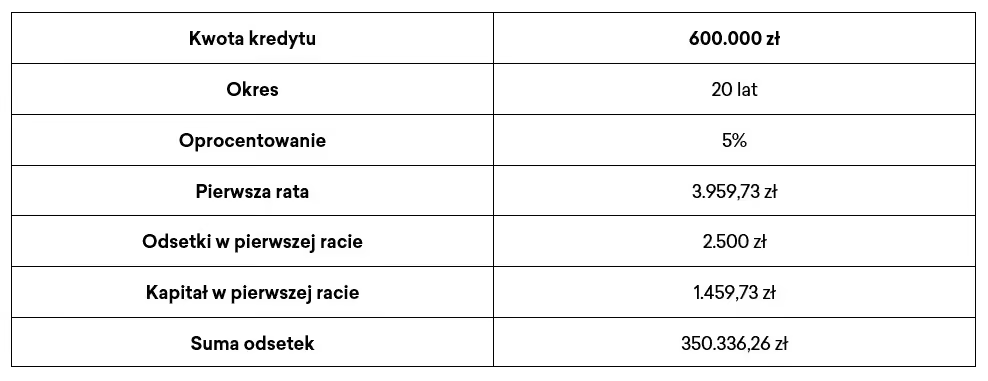
The first installment is just under four thousand zlotys, and assuming conditions remain unchanged until the end of the loan term, it will be exactly the same for the next twenty years. Only its structure will change—month by month, the principal portion will increase while the interest portion will decrease.
Decreasing installments
Decreasing installments, as the name suggests, get smaller month by month. Although they can be significantly cheaper overall, they are chosen much less frequently by Poles due to their drawbacks:
- The initial installment is significantly higher, which results in lower creditworthiness.
- It is difficult to manage your household budget at the beginning when the installment is high, especially when you are also facing the costs of renovating or furnishing your home.
A decreasing installment is calculated in a simple way: the borrowed amount is divided by the number of months, and the corresponding interest is added. For example, a loan of 600,000 PLN for a period of 20 years results in a constant principal payment of 2,500 PLN throughout the entire repayment period. This means the principal portion is always the same, while only the interest amount changes, depending on the remaining balance. Because the principal is repaid faster than with equal installments, this ultimately results in a lower total cost of the loan.Although in theory each subsequent installment should be smaller than the previous one, this is not one hundred percent certain. Keep in mind that the WIBOR rate affects the interest rate, which, in a rising interest rate environment, can increase your installment by several hundred zlotys.
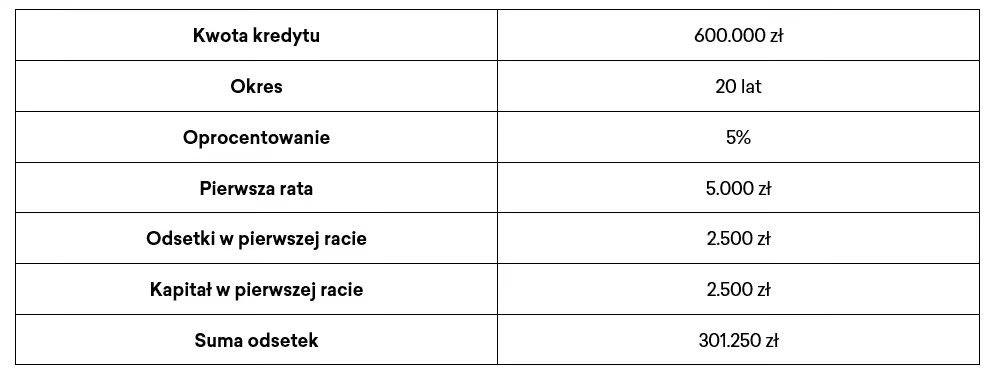
As you may have noticed, the interest on the first installment is identical in both cases. This is not surprising, as the first installment in both scenarios is calculated based on the same amount.
Comparing equal and decreasing installments
The biggest differences between equal and decreasing installments are noticeable in long-term mortgage loans for large amounts. To illustrate these differences, let's look at a comparison of installments over the years, using the same loan data as in the previous tables.
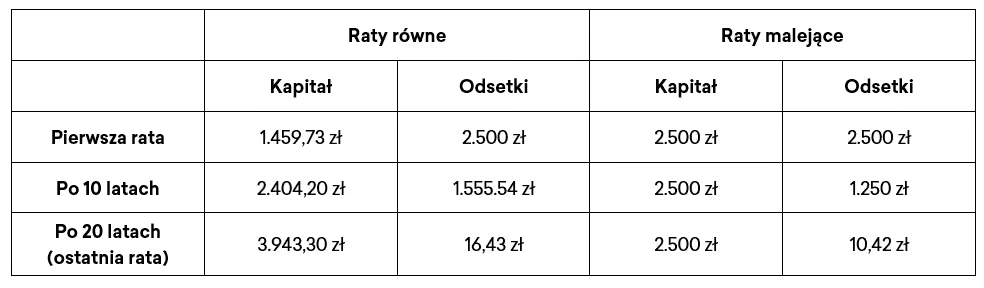
With equal installments, the principal portion will only exceed the level of decreasing installments (2,500 PLN) after 11 years and 11 months. At that point, the difference in the capital already repaid is 253,674.97 PLN for equal installments and 357,500 PLN for decreasing installments. That is a difference of nearly 104,000 PLN in principal on which you will continue to pay interest for several more years. This results in a difference of 49,086.26 PLN in total interest paid, in favor of decreasing installments.
When and why should you choose a specific type of installment?
I know, numbers can be tiring, and you don't want to do the math and would prefer a simple answer. I understand that, so I will give you specific situations that favor choosing one type of installment over the other.
When to choose decreasing installments:
- You want to minimize the total cost of the loan.
- You have high creditworthiness.
- You expect lower earnings in the future.
- You intend to make extra repayments on your loan.
When to choose equal installments:
- You need higher creditworthiness.
- You are young and at the beginning of your career—your earnings will grow over time, so it will be much easier for you to fit a lower installment into your budget right now. It will take many years before a decreasing installment becomes lower than an equal one.
- A lower installment at the beginning of the loan will allow you to allocate more money toward finishing your property.
Both types of installments have their pros and cons. When making your choice, be guided by your personality, habits, and financial situation. You know them best and know what matters most to you.