At a glance
Published:
23.10.26
Updated:
23.10.26
High absenteeism is a real detriment to the company. What can be its causes? And above all, how to deal with it and at the same time support employees and the image of the company.
- What are the most common real causes of absence?
- How to address absenteeism?
- How to support employees?
In this article, you will learn:
- what the most common causes of absenteeism are,
- what the current market trends, forecasts, and tendencies are,
- how to prevent absenteeism,
- how to support employees wisely and in the long term.
In our article on employee health (which you can find HERE), we pointed out that every percentage point of sickness absenteeism corresponds to a 0.7 percent loss in company profit [1]. Additionally, this issue negatively impacts team morale, the company atmosphere, and ultimately, work efficiency. However, it is worth remembering that sickness absenteeism is not the only reason for absence, even though it is indeed the most dominant one.
What are the most common real causes of absence?
- Mental and physical health
Since our article on preventing sickness absenteeism was published, there have been few significant changes in trends. In the early part of 2023 compared to 2022, there was an increase in sick leave related to respiratory diseases (up by 5.7 percentage points) and mental health disorders (a slight increase of 0.1 percentage points), while the number of sick leaves related to pregnancy, childbirth, and the postpartum period decreased (by 2.2 percentage points) [2]. However, it is difficult to speak of a permanent trend here.
Unfortunately, data on this type of absenteeism is often skewed due to abuse by employees themselves. As many as 1/3 of employees admit to it. 28% of those who admitted to such behavior justified it by a lack of desire to work that day, 24% needed a day of relaxation, and 18% simply needed to catch up on sleep. [3]
Of course, such absenteeism is not always due to laziness. A day of relaxation or sleep may be a response to previous overwork, and a lack of desire to work may be a response to a poor office atmosphere. An explanation that shifts the blame onto employees is simply too limited and, in the long run, can lead to a drain of talent from the company. - Childcare/care for family members
The second most common reason for absence from work is related to childcare. Poles have the following types of leave at their disposal: maternity, parental, childcare, and paternity leave. Employers must also take into account leave for the care of a healthy child (2 days per year) or leave for the care of a sick child under the age of 14. - Annual leave
This is another possible cause of absenteeism. As it turns out Polish employees prefer taking longer vacations all at once. This trend applies to more than half of them, with 75% of vacationers choosing to take their time off in July or August [4]. - Other reasons
The Labor Code also allows for other reasons for absence, such as being called up for military service or by state institutions, family matters (e.g., funerals of loved ones), as well as unforeseen events. However, these account for a marginal number of absences, making it difficult to draw any forecasts or constructive conclusions.
How to address absenteeism?
Sickness absence
First and foremost, it is worth determining whether the company… actually has such a problem. For an office environment, values between 0.1% and 1% are considered natural (these ranges may fluctuate slightly depending on factors such as seasonal drops in immunity) [5].
Even in such cases, it is worth taking care of employee health. This acts as a preventive measure while also building an image of a company that cares about the well-being of its team.

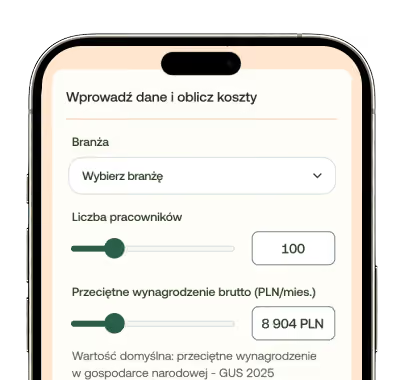
How much does absenteeism cost in your company?
Estimate the L4 costs of employees in your organization based on data for your industry.
Calculate the costs of absenteeism
Calculate the costs of absenteeism
How to support employees?

Benefits that improve access to primary medical care – an example of this is the platform Telemedi, which facilitates quick access to medical advice, including obtaining e-prescriptions or referrals to specialists through online consultations. Appointments with diagnosticians are available as soon as one hour after the request is made. This solution not only helps us look after employee health but also ensures that a doctor's visit does not require hours of absence from work.
Diagnostic benefits – good health means keeping your finger on the pulse. It is worth supporting employees in this by offering them laboratory test packages (these can be found, for example, within MultiLife). Additionally, this type of benefit can be supported by internal company campaigns that highlight the need for regular check-ups. Such "Health Days" serve not only a preventive function but also an integrative one.

Sports benefits – The 2022 Benefit Systems report shows that nearly half, or 47% of Polish employees, expect support from their employers regarding physical activity [6]. This is a win-win situation, as for the employer, it is effectively an investment in lower sickness absenteeism. Beyond a sports card, it is worth providing your staff with consultations with a personal trainer and a nutritionist, or various courses that help build and maintain fitness. These types of solutions are also offered by MultiLife.
Mental health benefits – mental health problems have an increasing impact on sickness absence. At the same time, as the above-mentioned Benefit Systems report proves, as many as 48% of employees are in favor of mental support from the company. The same study reveals that 43% of them place relaxation courses/workshops high on the list of desired benefits. This type of solutions is also provided by MultiLife. Employees will find here, among others: breathing, yoga and mindfulness courses, as well as useful content for mental health care - e.g. psychoeducational courses or relaxation materials.
Proper infrastructure – quiet work rooms, relaxation rooms, internal yoga studios – all of this makes it easier for employees to take care of their mental and physical health even after returning to the office.
Fake sickness absence
This refers to the aforementioned situations where an employer has reasonable suspicions that a large portion of sick leave is actually due to reasons other than genuine illness – such as fatigue, stress, or a poor atmosphere at work.
Partially, the solutions can be similar to those mentioned above – appropriate infrastructure or taking care of psychophysical well-being. It is also worth rethinking processes and individual workloads. Initiatives that foster team integration can be particularly beneficial; you can read more about them in the article "Teams back together".
Care absence
On April 26, 2023, an amendment to the Labor Code came into force, implementing the EU Work-Life Balance Directive in Poland (Journal of Laws of 2023, item 641). This act, among other things, extends parental leave for fathers by an additional nine weeks [7].
Although some employers approach these regulations with a great deal of caution, in practice it is an excellent solution for activating all employees – especially women, who most often bear the greater burden of childcare-related leave.
Annual leave
For 81 percent of Poles, a good vacation is key to maintaining job satisfaction. Meanwhile, as many as one in five admits to having cut their vacation short at the request of their employer [8]. It is worth remembering that an adequate amount of rest is in the interest of both employees and employers. A tired team will always work inefficiently, and the mood of overworked staff will negatively impact the company's image and reputation.
As you can see, absenteeism is not always a cause for concern. The most important thing is to keep the right proportions in everything - both the accumulation of leaves and numerous L4s mean that it is worth considering schedules, processes and benefits.
Sources