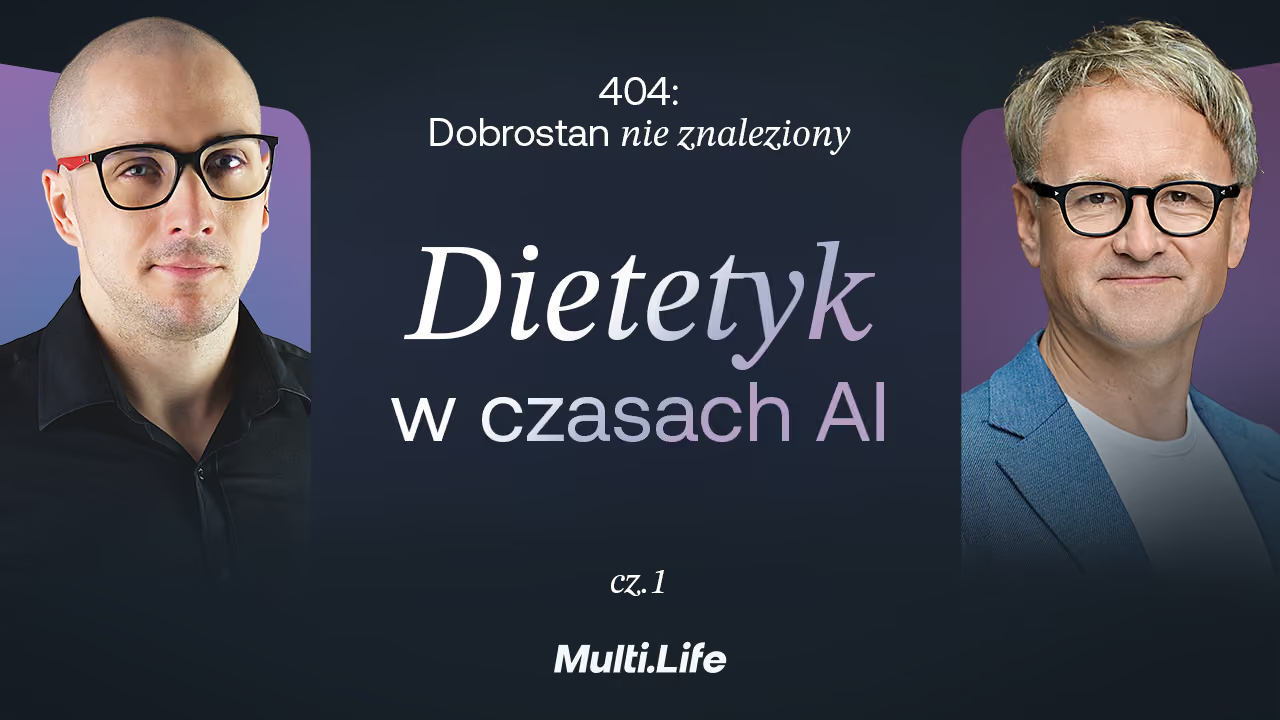
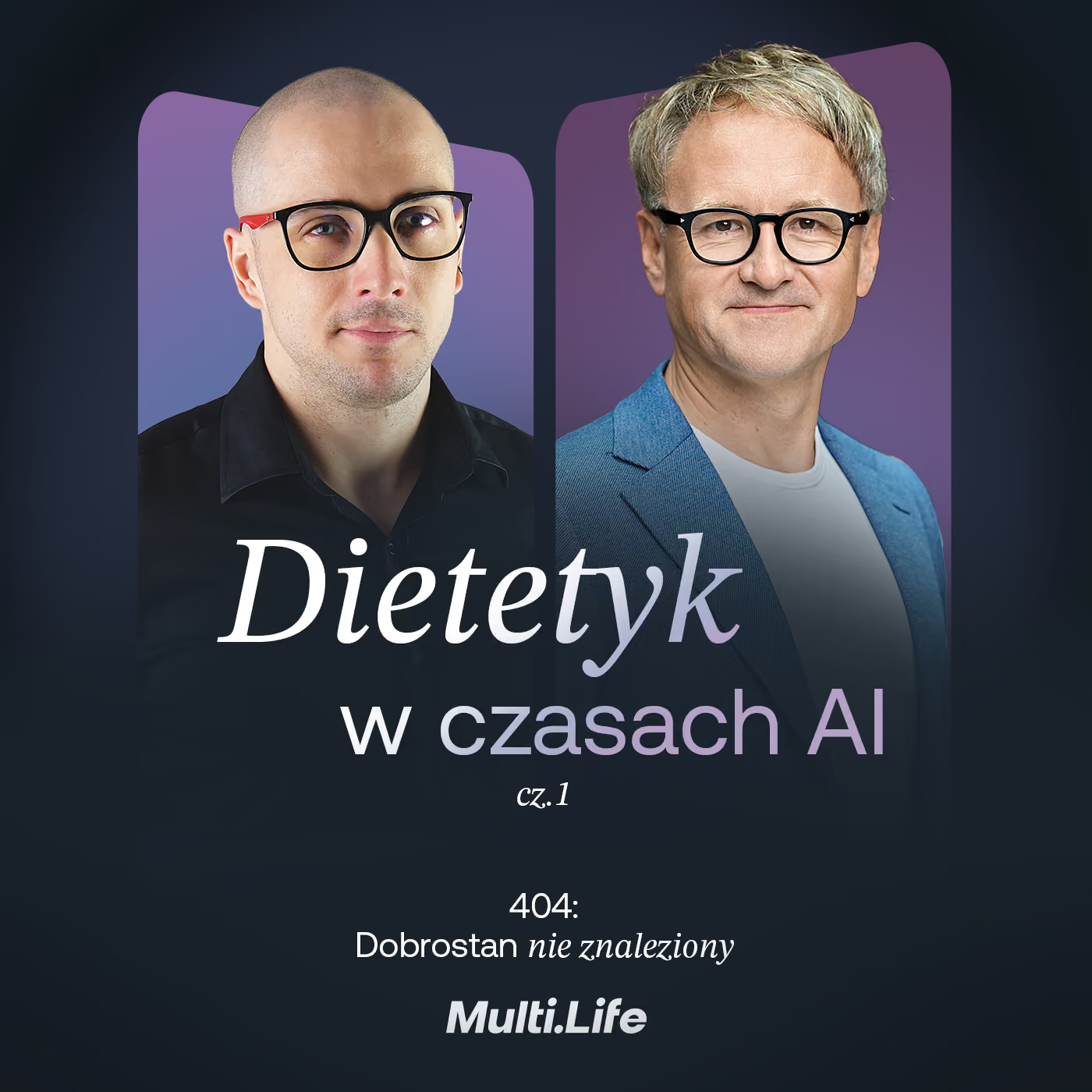
AI technology is so ubiquitous today that it will soon be popping out of our refrigerators. Actually… it’s already there. More and more people are trusting apps, smartwatches, and even innovative home appliances to manage their diets. Will this really be good for us? And what is the role of a nutritionist in all of this? In the first part of our conversation, nutritionist and psychodietitian Dr. Damian Parol answers these questions. Welcome to a new episode of the series 404: Wellbeing Not Found, hosted by Artur Kurasiński.

  1. 00:00:00 Introduction
  2. 00:03:53 Diet then and now
  3. 00:07:31 Diet apps in practice
  4. 00:10:02 The relationship with a nutritionist
  5. 00:14:31 Nutritionists and social media
  6. 00:18:33 Wellbeing as pressure
  7. 00:22:50 Unhealthy food - rarely or never?
  8. 00:28:36 Nutritional facts and fake news
  9. 00:35:41 Trends in nutrition
  10. 00:44:44 AI support in diet
  11. 00:54:46 The Glucose Revolution
Published:
19/8/2026 22:35
See also
Okładka filmu 'Improwizacja w praktyce: mniej planu, więcej działania'
Okładka filmu 'Improwizacja w praktyce: mniej planu, więcej działania'Okładka filmu 'Improwizacja w praktyce: mniej planu, więcej działania'
Improvisation in practice: less planning, more action

Does the fear of making a mistake hold you back more than a lack of competence? There is a concrete solution for this. In this episode of our "Company That Supports" series, Dr. Ewa Hartman speaks with Bart Jurkowski—a business psychologist and creator of the I'MPRO IMPRO method—about how to build flexibility and psychological resilience in a dynamic work environment. We discuss how your internal dialogue influences decision-making, what psychological safety in a team looks like and how to recognize it, which questions strengthen adaptability and openness within an organization, and how improvisation as a method helps train mindfulness, confidence in communication, and collaboration. You will also find simple improvisation exercises in this episode.

finances
'What special forces units teach us about decision-making, pressure, and performance in business' video cover
'What special forces units teach us about decision-making, pressure, and performance in business' video cover'What special forces units teach us about decision-making, pressure, and performance in business' video cover
What special forces units teach us about decision-making, pressure, and performance in business - Wojciech Wereszko

It is easy to snap a single match, but ten together create an unbreakable structure. This is exactly how resilience is built in the most demanding environments: not alone, but through the strength of a team and a supportive environment. In this episode of our "Company That Supports" series, Dr. Ewa Hartman speaks with Wojciech Wereszka—a former officer of the GROM and Formoza special forces units, and now a leadership expert and owner of True Leader—about what business can learn from special operations units.

finances
'AI technology in psychotherapy: support or obstacle?' part 1 video cover
'AI technology in psychotherapy: support or obstacle?' part 1 video cover'AI technology in psychotherapy: support or obstacle?' part 1 video cover
AI technology in psychotherapy: support or obstacle? - Andrzej Silczuk & Paweł Szczesny part 1

Will AI soon replace your therapist? Or is it a fast track to disaster? Artur Kurasiński discusses whether and how technology can support well-being and mental health with psychiatrist Andrzej Silczuk and Dr. Paweł Szczesny, a specialist in bioinformatics and the psychology of artificial intelligence systems. 

404: Wellbeing not found
'Deskilling – how we forgot what we are capable of' video cover
'Deskilling – how we forgot what we are capable of' video cover'Deskilling – how we forgot what we are capable of' video cover
Deskilling – how we forgot what we are capable of

Reading, writing, memorizing, and perhaps even… thinking—are we at risk of slowly "outsourcing" all these skills to increasingly advanced technologies? And if so, what comes next? How can we protect ourselves from losing fundamental competencies? Or perhaps we can let some of them go without regret, gaining new ones in their place? We are asking all these questions today, feeling that while change is inevitable, its direction is not necessarily clear. In the next episode of our series, The Supportive Company, I will discuss development in the age of AI, the risks of deskilling, and the technological revolution with Dr. hab. Bartosz Żukowski, professor at the University of Lodz, a philosopher, cognitive scientist, and researcher of the human mind.

finances
Show more