At a glance
Published:
23.10.26
Updated:
23.10.26
Are leaders and managers the same thing? Which skills should they develop, and which tools can help most? Explore our expert’s recommendations.
- Development tools for everyone
- What tools can you use here?
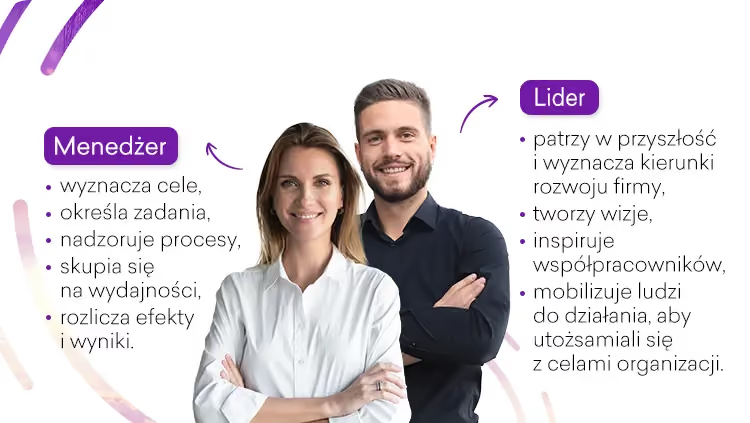
To start, there are many approaches, models, and theories about what makes a good leader—in terms of personality traits, skills, or mindset. Most of them, however, agree that there is a difference between being a leader and a manager. Both roles are essential to an organization's success. Recognizing the distinction between them is crucial for creating development plans, both for the HR department and for the managers themselves.
Development tools for everyone
Organizations are increasingly creating job descriptions that detail the expected skills, knowledge, and attitudes (known as competency profiles). These can serve as a starting point for planning the development of the entire staff and individual managers.
What tools can you use here?
- Comprehensive feedback on work quality
To get a full picture of a manager's way of working, thinking, and acting, it is worth considering a 360-degree assessment, which provides an opportunity to gather feedback on their performance. It is best when this feedback comes from as wide a group as possible—including the team they manage, colleagues, their supervisor, and stakeholders. Very often, such a holistic perspective acts as an excellent mirror for a manager. It allows them to see how they truly operate and what impact they have on others. It will also reveal their strengths and weaknesses. Naturally, it is worth conducting such assessments regularly and implementing necessary changes on an ongoing basis. - Modern ways of acquiring knowledge
Any gaps in knowledge on a given topic can be easily supplemented by reading, articles or training in a specific area. Here, for example, an application that provides thousands of e-books and audiobooks, available 24/7, comes in handy. They are also worth recommending online courses, based on current topics and industry trends. You will find both of these solutions in MultiLife. - Learning foreign languages
Extremely important, and in the case of international companies, absolutely essential, is fluency in foreign languages, particularly English and German. Development-oriented managers should invest in expanding their vocabulary, using solutions such as: language courses under MultiLife. This gives you access to a larger group of contacts, readings and the most prestigious courses at excellent universities (including Cambridge, Harvard and Stanford). Only a handful of the best managers can boast of completing them, so there is something to strive for. - Simulation-based learning
You also need to remember about gaining experience! In this case, that means learning by stepping into various situations—simulations that prompt us to apply different ways of acting and thinking. These can be workshops, programs, or development groups working on real, everyday challenges (action learning). There are many such services available on the market.
It is important to implement even small actions after a workshop that the manager will apply in their daily work. It is also worth scheduling regular meetings with your manager to discuss whether the actions being taken are truly effective. What can work better than regular feedback? Thanks to it, there is a chance that the time spent on training will actually translate into results in everyday work. - A deeper look within
Psychotherapy, mentoring, and coaching are the most profound forms of development. They offer a chance to examine one's thoughts, habits, and beliefs. These, in turn, directly influence a manager's decisions and actions. Self-awareness, built, for example, during sessions with a psychologist, is incredibly empowering. Through it, an employee gains insight into the resources (skills, talents, personality traits, needs, or values) they possess. However, you don't always have to look for a mentor outside the organization. Sometimes someone from within can be very helpful because they know the specifics of the company. Just remember that it shouldn't be someone who works directly with the manager, especially in a boss-employee relationship. - Industry perspective
If you want to encourage a manager to broaden their horizons, think outside the box, or seek innovation, it is worth suggesting they join various industry meetings, conferences, or utilize networking. These are generally opportunities to challenge your views and beliefs against others, encounter entirely new perspectives, and get the stimulus to delve deeper into a topic. Check LinkedIn from time to time to stay up to date with industry events. Surely some of them will be worth recommending to your managers. - Psychometric assessments
Many HR departments have at their disposal various types of research that give managers an image of their personality, management style and level of mental resilience. Their results, properly discussed by a professional, can be a good stimulus for reflection on the style of work and cooperation. And, of course, to plan development activities. If you do not have such research, check what is currently available on the market in the area you are interested in, obtain the necessary certification or use external experts who can conduct it for you. - Learning by coaching
What can develop managers in a leadership direction is acting as a mentor, buddy, or coach for less experienced colleagues. It is worth conducting meetings with a specific mindset—focused on listening and asking questions. It is important to cultivate curiosity about the other person and give them the space to find solutions, rather than handing them over on a silver platter just to be implemented. If managers stand out in any area of skill, it is worth placing mentees under their wing and observing how they develop together.
HR departments usually organize workshops preparing for the role of a mentor, buddy or coach in the organization. This provides basic information about the tasks and skills expected in this role. There are also many courses and training on the market in this area that can help in the development of selected managers.
For management, development is a continuous process in which appropriate methods and tools are selected based on specific needs. It is beneficial for managers to regularly discuss their progress with the HR department and take actions that will strengthen their key competencies. Everyone has their own path to achieving success and reaching their full potential. Therefore, it is worth approaching employees individually and adapting them as well benefits offer, which are supposed to support them in this, to a specific person. Find out how you can do this with MultiLife.