.svg)


I want to talk about your work. The other person hears: "something went wrong." The conversation loses its purpose before it has even begun.
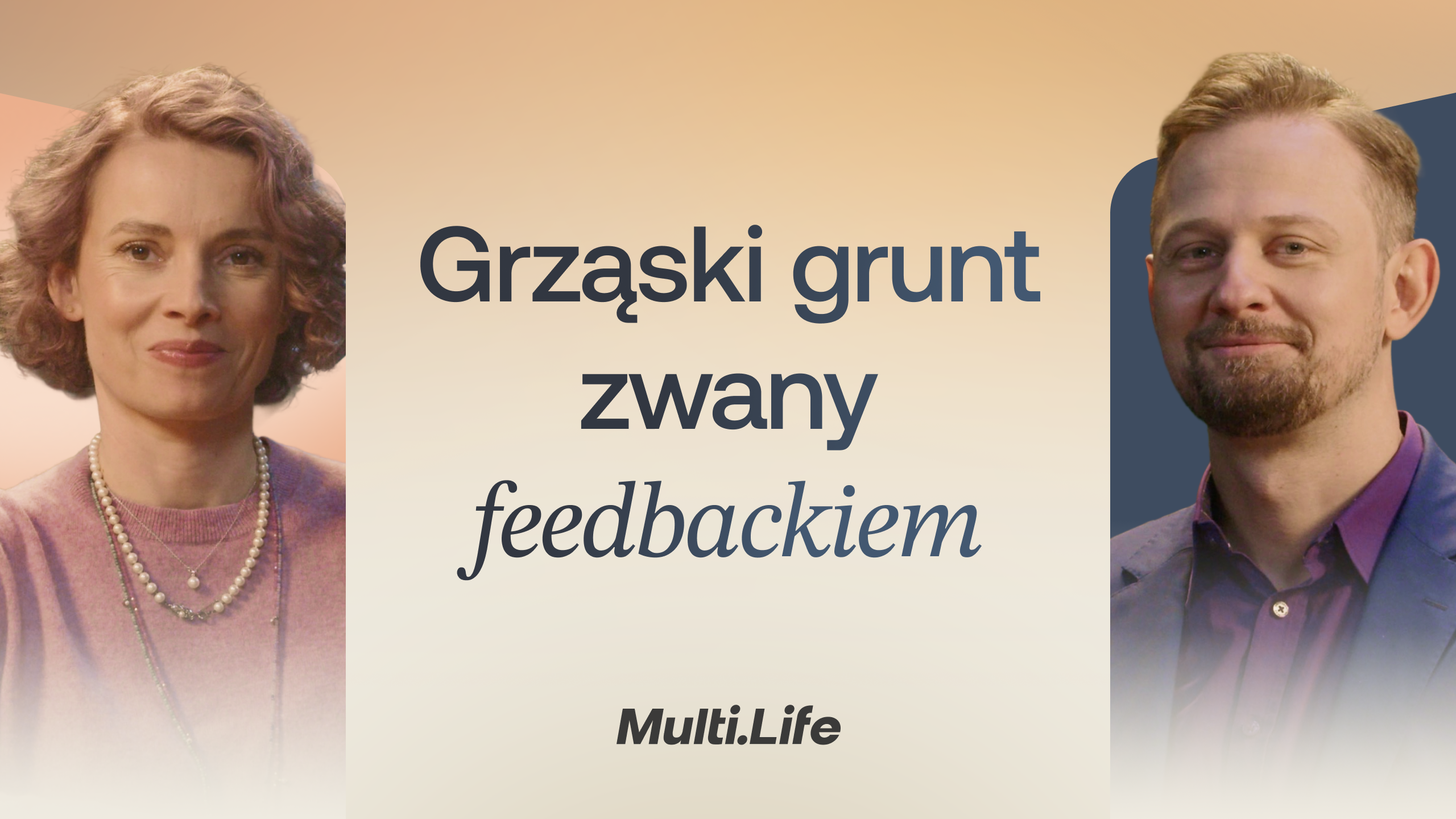
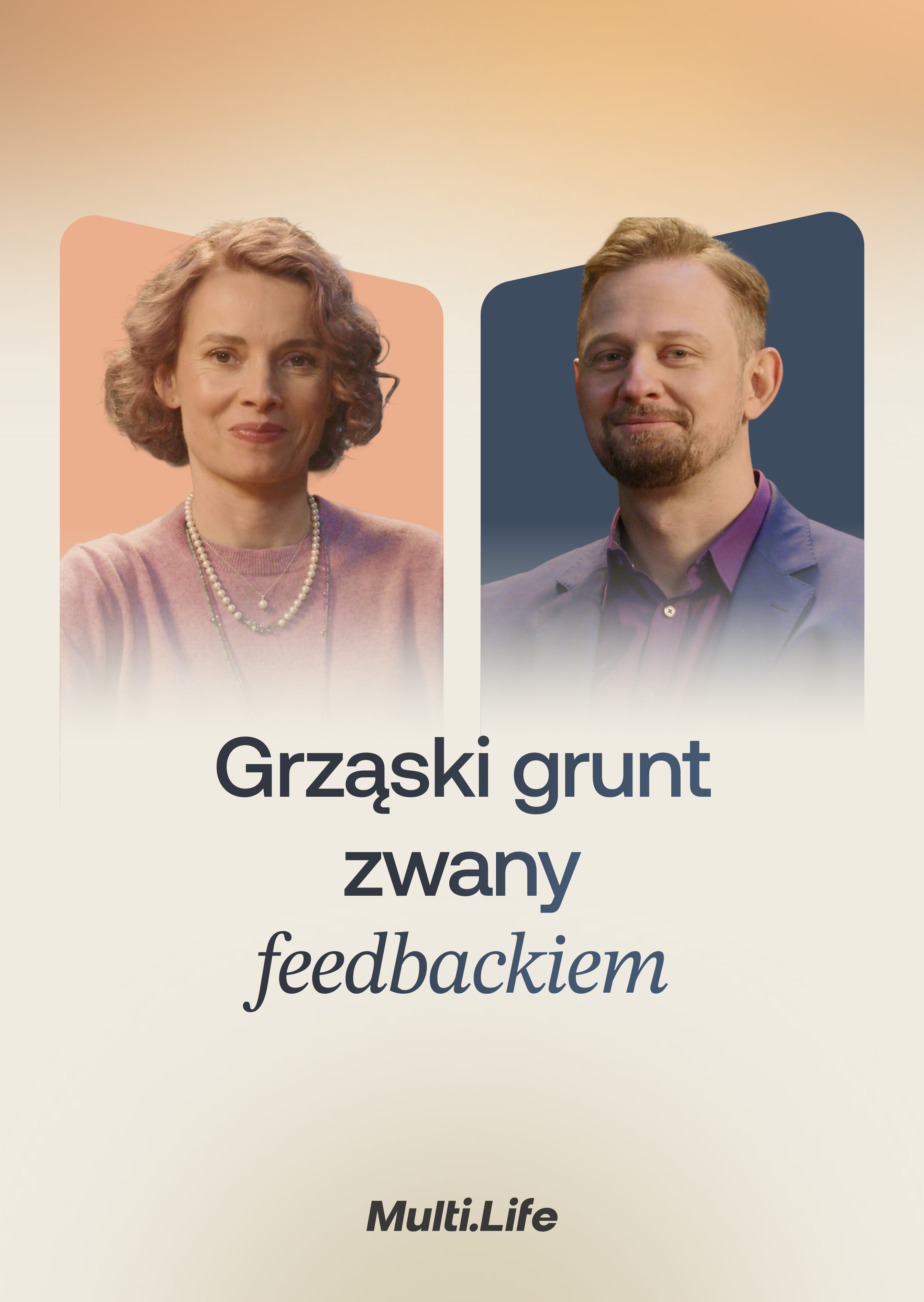
In this episode of the "Company That Supports" series, Dr. Ewa Hartman talks to Rafał Cupiał—a business trainer, consultant, and specialist in collaboration and feedback—about why feedback so often backfires and what to do to change that.
We discuss:
- why every assessment is based on a fragment of reality and how that limits the effectiveness of development conversations,
- what the social layer of feedback is and why it is often this, rather than the content itself, that determines how feedback is received,
- how a few sentences at the beginning of a conversation can turn an attack into a dialogue,
- what psychological safety really is and why it has nothing to do with avoiding difficult topics.
Feedback is not a technique. It is a daily decision: are you building an environment where people speak openly, or one where they learn to stay silent?
This episode is from the Multi.Life channel - a wellbeing platform for companies. Check it out: https://multi.life | Demo for HR: https://multi.life/#formularz
- 00:01:38 Guest introduction
- 00:02:10 What is feedback and why do we have a problem with its definition?
- 00:03:04 How (easily) can you ruin feedback?
- 00:05:27 Mistake #1: the illusion of having the full picture
- 00:06:33 Mistake #2: Ignoring the social layer
- 00:08:49 Dr. Therese Houston's research: two questions that reveal what people really need from feedback
- 00:11:30 Exercise - what bad feedback looks like in practice
- 00:13:42 Fundamental attribution error - why an employee is "incompetent" while a colleague "was stuck in traffic"
- 00:14:44 Cortisol and hierarchy - the biological mechanism behind bad feedback
- 00:15:41 How to reframe a difficult conversation? Pre-utilization technique and building an alliance
- 00:19:13 The social cost of bad feedback: work-to-rule strikes and turf wars
- 00:20:05 Five examples of prosocial moves
- 00:22:50 Relationships as a safety cushion and allowing employees to draw their own conclusions
- 00:27:38 Can one bad apple spoil the whole bunch (or one employee the whole team)?
- 00:34:23 Can feedback be too soft? Amy Edmondson’s psychological safety model
- 00:38:42 A story from a high-risk pregnancy ward: how psychological safety saves lives
- 00:44:02 David Rock’s SCARF model – 5 aspects of human interaction in the context of feedback
- 00:45:19 Good and bad feedback live
- 00:51:17 The importance of providing context, explaining, and asking open-ended questions
- 00:53:16 What do employees think about a boss's intentions during criticism? A surprising study
- 00:57:44 Receiving feedback
- 01:00:14 Three types of feedback: appreciation, evaluation, and coaching
- 01:05:01 "A supportive company" – according to Rafał Cupiał: psychological safety as a starting point
“

Published:
21/8/2026 15:08