.svg)



Software training or language courses are no longer enough in today's rapidly changing reality.
Both employers and employees increasingly feel that comprehensive, continuous development is a necessity today.
How can you ensure that training actually meets the needs of the company and its teams?
How can you coordinate education without compromising work efficiency?
What topics should be covered?
What mistakes should you avoid when organizing a webinar, and where can you get feedback after it ends?
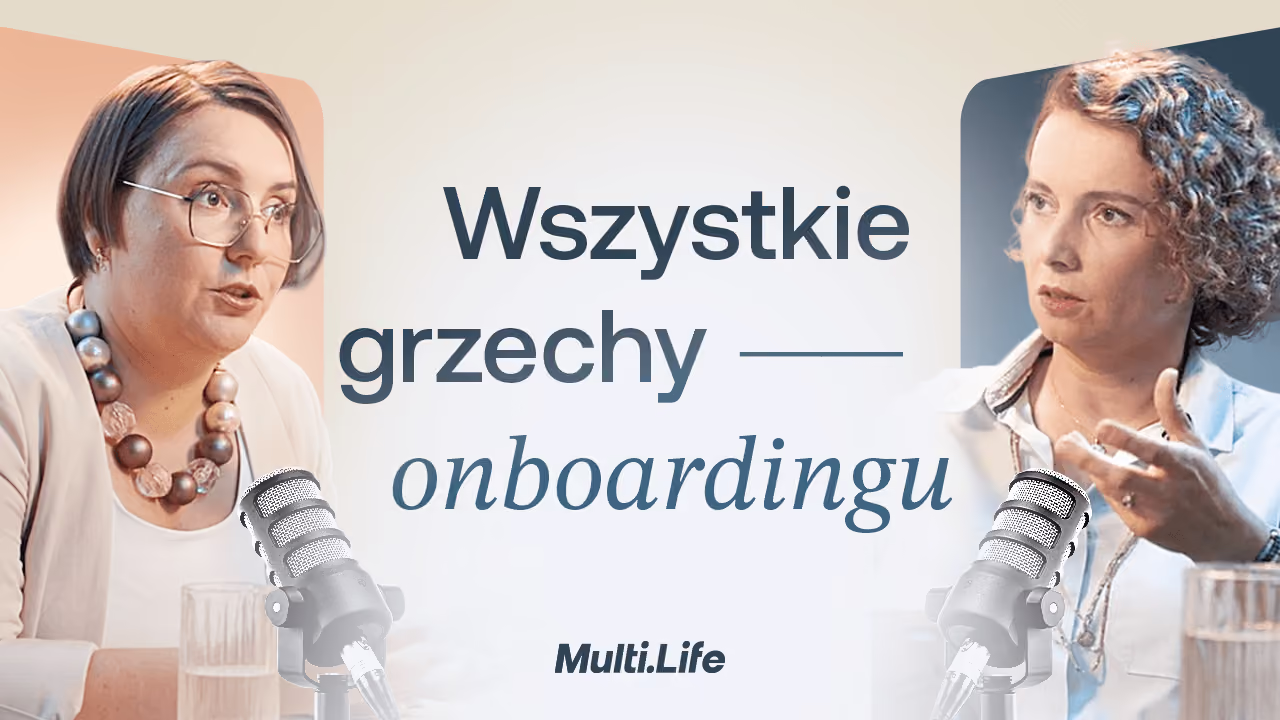
These and many other questions Dr. Ewa Hartman answers Anna Łyjak, Europe Central Learning Leader at EY. Today's guest in our "Company That Supports" series has 20 years of experience in HR and has been leading training for a region covering 33 countries and nearly 27,000 employees for over 3 years. She will share, among other things, the secrets behind one of the largest projects she has managed – Learning Fridays.
- 00:00:00 Introduction
- 00:01:11 What are Learning Fridays and how did they start
- 00:05:28 How leadership was convinced to implement the initiative
- 00:09:47 Building a learning habit within the organization
- 00:12:03 Why learning is crucial at EY
- 00:14:33 Diversity of topics and the most popular sessions
- 00:20:28 Challenges and lessons learned from the program implementation
- 00:25:16 Cross-cultural collaboration and the global development of Learning Fridays
- 00:28:49 Evolution and automation of the registration process
- 00:34:05 The program's impact on the organization and employee engagement
- 00:36:09 Challenges and benefits of large-scale development initiatives
- 00:43:46 Key success factors of the program
- 00:48:10 Trust and autonomy in leadership development
- 00:51:25 What's next – future plans for Learning Fridays
Transcript
Dr Ewa Hartman: My guest has over 20 years of experience in HR, specifically in training and employee development. Throughout her career, she has provided consulting on training and qualifications, and has created development programs for employees at both local and regional levels. For over 3 years, she has been leading the training area for the entire region.
Currently, this covers 33 countries and nearly 27,000 employees. In 2021, she initiated the "Learning Fridays" development program, which we will be discussing today. Anna Łyjak, EY Europe Central Learning Leader, is someone for whom "the sky is not the limit." And why? We'll find out in a moment. Welcome, Anna.
Anna Łyjak: Hello. It's a pleasure to be here, Ewa.
Dr Ewa Hartman: We are here to talk about what I believe—though I haven't conducted a super-thorough study—is perhaps the largest development program on the planet: "Learning Fridays." Could you tell us a little bit about it?
Anna Łyjak: I'm very happy to hear you say that, because it really is a massive initiative, a very large undertaking, but also something very close to my heart, as I don't deny that I was the one who initiated this program in our organization.
"Learning Fridays" is an initiative we started in 2021. It's an initiative where every other Friday our employees can participate—and I emphasize "can," because it is completely voluntary. We don't force anyone, and we don't rigidly add any invitations to anyone's calendar. It is an initiative where they can sign up for live webinars.
As I mentioned, it takes place every other Friday, so, in fact, quite a few have taken place since we started. We have held over 70 "Learning Fridays."
Dr Ewa Hartman: Since the beginning of the program?
Anna Łyjak: Since the beginning of the program.
Dr Ewa Hartman: So, 70 Fridays, right?
Anna Łyjak: Yes, I would even say 78. Because we dedicated exactly 78 Fridays to the development of our employees. It was an initiative that initially seemed like it would be a small training project—and I won't hide the fact that the training agenda for our employees at EY is very extensive, and we, as a company, truly place great importance on development, training, and upskilling. This is, first of all, a market requirement, but above all, our employees are simply hungry for knowledge and eager to learn. So, it was a kind of platform to facilitate these trainings and enable the acquisition of additional knowledge on those Fridays.
Dr Ewa Hartman: And, Ania, roughly how many people have taken part in this program since it began? This is something that I think might surprise quite a few people.
Anna Łyjak: Yes, and I might also mention that the region where we launched this initiative is the Central, Eastern, and Southeastern Europe region, as well as Central Asia—so 29 countries, very diverse in terms of size and culture, where over 17,000 employees are employed.
I mention this historical context specifically because our region has grown a bit since July. However, as I mentioned, we have organized 78 such training Fridays, totaling over 750 live sessions.
Dr Ewa Hartman: 750 live sessions, that's right.
Anna Łyjak: And there were over 133,000 participants in total.
Dr Ewa Hartman: That’s impressive, isn't it?
Anna Łyjak: It is impressive. I think it’s also impressive that this is one of the largest training initiatives at EY globally, because we are a global firm, and as I mentioned, we place a great deal of importance on development.
The offering is very extensive, but we take pride in the fact that, as a region, we are the only ones who actually do this so consistently. And, indeed, it happens all the time, without any breaks. We actually only take time off in August.
Dr Ewa Hartman: Exactly. And this immediately brings up further questions, and the questions are as follows.
The topic is the topic. The program is huge, it appears every other Friday, it has been running for several years now, and that means that during the hours when the webinars—the live webinars—are held, employees can take advantage of them, as you said, and they do, because we have thousands of people participating. And here is my question: how were you able to convince the decision-makers to allow such a large group of people to switch to something other than work every other Friday?
Anna Łyjak: Looking back, I think we managed to do it quite quickly. I think that, as we mentioned, we place a very high value on training and development, and our leaders really support that strongly. But maybe I’ll step back a bit in the history, because I think that matters too. The year 2021 was essentially the year of emerging from the pandemic.
It was a time when things hadn't quite returned to normal yet. At that time, the vast majority of our employees were working remotely, and training had to evolve; there was a lot of what I would call "hard," technical training that is mandatory in our organization. It shifted from in-person training to e-learning.
So there was a lot of that. We, of course, conduct employee satisfaction surveys, like most organizations, to hear what our employees have to say. And in 2021, among many other aspects, our employees told us that they didn't have time to learn. That the offering was very rich, of course, but they didn't have the time for it, so we started thinking about what we could do to provide employees with that time for learning. And that’s why we came up with the idea—and I say "we" as the people who worked in training in the region, because it was a regional problem.
Dr. Ewa Hartman: But they don't have the time, yet they want to learn, right?
Anna Łyjak: They want to, but they don't have the time. So we started wondering how to find the time for employees to actually develop, because they want to. We wanted it to be voluntary, but to set aside a specific day of the week or month when the organization actually dedicates time for learning, so that employees can upgrade their skills.
And we started thinking: "Okay, maybe it should be one day." And of course, it's not easy in dynamic organizations where a lot is happening to find that day. Mondays are no good because client meetings start right away and projects kick off. Wednesdays aren't the best either, because they are in the middle of client projects.
"So maybe let's try Fridays?" Maybe those Fridays won't be perfect, but we have to do something, we have to find that space somewhere. And we came up with the "Learning Fridays" idea. From 9:00 AM to 12:00 PM, we offer a total of 12 different topics, meaning we offer 3 to 4 topics each hour.
We started with 9, now we are actually up to 12 in total, but from the beginning, we said that this is an initiative where we want to create and build a learning habit among employees. Because it is extremely important that employees can actually learn, but also want to learn, and that this approach of acquiring a lifelong learning habit takes root in employees and they want to take advantage of it.
So, we really wanted to create this learning habit by giving freedom and flexibility in choosing topics. Everyone has the right to choose what they want, and I think what was also unique is that from the very beginning, in all our communication about this initiative, we said that you can choose one, two, or three topics. And you can join the webinar just as flexibly – whether you take a break during work, go grab a coffee and listen with headphones, go for a walk, maybe walk the dog, or just step away from your desk and listen to something else interesting. And above all, what the employee themselves wants to learn.
We don't determine anything, we don't say, "Oh, today there will only be webinars on artificial intelligence." No. We give freedom – choose the topics that interest you at that given moment. I think there is one more thing that is characteristic of this initiative and perhaps distinguishes it from others: we announce the "Learning Fridays" agenda 10 days in advance.
So employees don't know in advance what the topics will be or what will be on the agenda; they find out on the preceding Tuesday of the previous week that they can sign up for the upcoming "Learning Fridays," and that's when we announce the topics. The idea was that it's really hard for us to predict in today's world what our calendar will look like a month or two months from now on a Friday.
It very often happened that when we organized various types of virtual training and sent out invitations well in advance, many people would accept, but then only 30-40% would join because, as you know, something important came up—either at work, on a project, or with a client—and employees couldn't participate.
So we thought: "Okay, if we let them know two weeks in advance, we are more capable of managing our calendars and saying: 'Okay, this is it. This is the moment when I can actually sign up for a given topic.'" And employees actually use it that way because they know the agenda is coming, and they know what they need at that time.
I know at that moment that I need to learn more about stress management because I have a stressful situation, or I know that I am very interested in mindfulness, so I will join the webinar dedicated to mindfulness. In today's world, it seems to me that so much is happening around us and we are bombarded with such a large number of different e-learning courses and training sessions that sometimes people don't know what to choose. But when we show this agenda, here and now, I know that I want to learn this.
Dr. Ewa Hartman: You mentioned a few things that really intrigued me. The learning habit. Right? So you wanted to build a learning habit. How important is learning in your organization?
Anna Łyjak: Learning is of colossal importance, and I think we are an organization that places a huge emphasis on development and employee learning from the very beginning of their career and at every level.
Above all, the development of hard, technical competencies, which is essential for performing the job, but also soft skills. We really attach great importance to this at every stage of a professional career and allocate time for it, so it is a learning organization. I think that in this day and age, you cannot afford not to be a learning organization, because you have to constantly upgrade your qualifications and adapt them.
Jeszcze parę lat temu sztuczna inteligencja w ogóle nie byłatematem szkoleń rozwoju pracownika, a teraz organizacje, które nie robiąszkoleń w tym obszarze, mogą gdzieś tam wypadać z rynku. Więc to niezwykleistotne.
Dr Ewa Hartman: I o tym też za chwilkę porozmawiamyNatomiast chciałabym złapać takie pewne rzeczy, już jako pewien „przepis nasukces”.
Czyli mamy tak – nie ustawiamy nikomu kalendarza mocno doprzodu, prawda, bo jest za duża dynamika i za duża zmienność. Więc, wpuszczamyinformacje niedługo przed wypuszczeniem tematów. Tematów jest naprawdę dużo, bojest 12 w dany piątek, czyli na pewno jest z czego wybierać. Mam pewnądowolność, jednocześnie mam przyzwolenie na to, że mogę w tym czasie iść nakawę, pospacerować, tak, że mogę faktycznie się wyłączyć.
Ja, z mojego doświadczenia, bo miałam, mam przyjemnośćuczestniczenia też w tym programie po drugiej stronie, wiem, że przykład idziez góry, bo spotykam partnerów i to jest z pewnością jeden z sukcesów tegoprogramu. Czyli wiemy, że faktycznie, ten proces uczenia się jest tak samorespektowany i szanowany, i doceniany na górze, jak i troszeczkę niżej whierarchii organizacyjnej.
I tutaj, mamy te tematy, właśnie tak, jak powiedziałaś. Botematy są, Aniu, jakie? Ja wiem, że ich jest ponad 300, tak? Tylko mamy twarde,mamy miękkie, podałabyś kilka?
Anna Łyjak: Oczywiście, lista jest bardzo długa, bofaktycznie na przestrzeni tych czterech lat, udało nam się już stworzyć takieportfolio ponad 340 tematów. I to są tematy, które my dzielimy na takiekategorie, z tych różnych obszarów, niezwykle istotnych teraz.
I to jest, oczywiście, sztuczna inteligencja i też w momencie,kiedy zaczynaliśmy wprowadzać tematy, to były to tematy, które ogólnie mówiły osztucznej inteligencji. Już teraz wchodzimy bardzo głęboko, już robimywarsztaty, webinary z konkretnych narzędzi. Ale, oczywiście, nie na każdymnaszym „Learning Fridays”.
Znajdują się tu też tematy z obszaru wellbeingu i to jestbardzo dużo. Myślę, że jest to chyba najszerszy obszar, w którym organizujemywebinary, bo mamy webinary z zarządzania stresem, z zarządzania swoim mózgiem itym, jak mózg wpływa na nasze działanie. Mamy mindfulness, mamy tematydotyczące asertywności, ale też mamy sporo tematów takich, my to nazywamyoperacyjnych, czyli mamy webinary dotyczące Excela, dotyczące PowerPointa,dotyczące efektywnego przygotowywania prezentacji. I tutaj, może Ciebiezaskoczę, ale najwięcej chętnych – i to zawsze mnie szokuje – że największezapisy mamy na webinary dotyczące Excela.
Dr Ewa Hartman: Proszę bardzo.
Anna Łyjak: I to jest po 700-800 osób, gdzie wydawało misię, że chyba już tutaj wyczerpaliśmy temat, że już naprawdę wszystko wiemy, arzeczywiście mamy fakt, że my bardzo te bloki tematyczne dzielimy. Bo każdytemat na „Learning Fridays” to jest webinar, jak powiedziałam, na żywo, co, teżmyślę, jest wartościowe dla pracowników, bo to jest moment, kiedy mogąfaktycznie posłuchać kogoś na żywo, zadać pytania.
My zawsze widzimy uczestników, którzy są aktywni na czacie, alejeszcze wracając do tych tematów, bo rzeczywiście, może nie będę wymieniała 340tematów, ale jest ich sporo, bo też mamy tematy dotyczące w ogóle odpornościpsychicznej. Kiedyś mieliśmy taki niesamowity webinar z takim, my to nazywamy „guestspeakerem”, bo raz na kwartał zapraszamy takich „guest speakerów” i wtedy jestto jedna sesja o danej godzinie.
I mieliśmy prowadzącego, który mówił o bardzo teraz też takim,myślę, ważnym temacie, czyli tej odporności psychicznej. I podczas tej sesjiopowiadał o swoim wypaleniu zawodowym, o swoim przykładzie wypaleniazawodowego. Myślę, że to był tak mocny przekaz i tak ważny, żeby jednak zwracaćuwagę na symptomy, które są, które się dzieją wcześniej, żeby nie doprowadzićdo takiej sytuacji.
Ja po tym webinarze odebrałam tyle wiadomości różnych odpracowników, że to była tak fantastyczna sesja, która tak dużo wniosła w ogóledo życia tych osób, że takie feedbacki, takie komentarze, to jest coś, co całyczas napędza i podbudowuje nas do tego, żeby robić więcej, ale też nie obawiaćsię trudnych tematów. Nie bać się tych trudnych tematów, bo zawsze znajdzie sięktoś, dla kogo to jest bardzo ważne i z czego będzie chciał skorzystać.
Dr Ewa Hartman: Właśnie, a jakie tematy są „nieśmiertelne”?Powiedziałaś Excel, ale poza tym?
Anna Łyjak: Tak, Excel jest „nieśmiertelny”. Myślę, że „nieśmiertelne”takie tematy dotyczą właśnie tego, jak radzić sobie w trudnych sytuacjach. Taasertywność, komunikacja, to zarządzanie stresem, zarządzanie emocjami. To sątakie tematy, z których pracownicy zawsze chętnie korzystają, ale pojawia sięteż bardzo dużo nowych tematów, które też zaczynają być coraz ważniejsze dlapracowników.
Ostatnio żeśmy wprowadzili temat dotyczący zdrowego jedzenia. Iteż, jak tworzyć te nawyki dobrego jedzenia, ale też takiego jedzenia, którenie wymaga od nas nie wiadomo jak dużych umiejętności i czasu. Z „nieśmiertelnych”tematów, które mamy od początku naszej inicjatywy, jest też temat dotyczącybudowania relacji z klientem i tego, jak możemy dbać o te relacje. Ale przedewszystkim, w naszym świecie konsultingowym, jak budować i też starać sięsprzedawać nasze projekty klientom. Więc to są takie tematy. Różnorodność tychtematów, myślę, też pokazuje, że dla każdego można znaleźć coś ciekawego, coś,co w danym momencie jest istotne.
Dr Ewa Hartman: Aniu, a co z trudnościami? Bozakładam, że jakieś były. Może momenty zwątpienia, może poczucie: „To jestbardzo duże. Nie wiem, jak my damy radę to unieść?”. Było coś takiego?
Anna Łyjak: Wiesz, Ewa, ja myślę, że my od początkuwierzyliśmy, że to jest innowacyjne. Wierzyliśmy, że jest to coś innego. Tak,jak wspominałaś na początku naszej rozmowy, już ponad 20 lat mam doświadczeniaw obszarze szkoleń i czegoś takiego wcześniej nie widziałam. Takiej inicjatywy,na taką skalę, ale oczywiście nie wiedzieliśmy, czy pracownikom to się spodoba.To, że my wierzyliśmy, że to może być fajne, ciekawe, bo czegoś takiego nie ma,to nie wiedzieliśmy, jak pracownicy zareagują. Tutaj też nawiążę może, bofaktycznie zadałaś pytanie o decydentów. My bardzo duże wsparcie mieliśmy od naszychliderów od samego początku tej inicjatywy.
Myślę, że to było duże zaufanie i też wiara w to, że ta forma iformuła rozwoju pracowników, że to będzie ciekawe dla wszystkich. I myślę, żebez tego wsparcia, ta inicjatywa nie byłaby takim sukcesem. Bo my na początku,jak w ogóle komunikowaliśmy, że coś takiego się odbędzie, to poprosiliśmy wtych wszystkich krajach, 29 krajach, partnerów zarządzających o wysłaniekomunikacji do pracowników. Że to jest nowa forma, że zachęcamy. „Zachęcam Was,jako partner zarządzający w danym kraju, do tego, żebyście się rozwijali,żebyście brali udział. To nie jest obowiązkowe, więc jeżeli macie czas i tenpiątek Wam na to pozwala, to bierzcie w tym udział”.
Wysłaliśmy również, poprosiliśmy też o wysłanie, równieżpartnerów zarządzających, komunikacji do wszystkich managerów, właściwie odmenadżera w górę, że: „Słuchajcie, będzie taka inicjatywa. Pozwalajcie ludziomna to, żeby brali w tym udział”. I też powtarzam, nie w każdy piątek,oczywiście. To nie o to chodzi, że w każdy, ten co drugi piątek, wszyscypracownicy uczestniczą w „Learning Fridays”. Bo my mamy osoby, któreuczestniczą np. raz w ciągu roku albo uczestniczą w co drugi „Learning Fridays”,albo widzą, że naprawdę tych tematów jest tak dużo, że naraz wezmą udział wtrzech sesjach, a potem przez pół roku nie będą brali, bo są na projekcie, niemają czasu i rzeczywiście wtedy, kiedy widzą, że mają okazję, to się zapisują iuczestniczą.
Więc ta dobrowolność formuły, bez takiej presji, to też jestto, co przekonało decydentów do tego, żeby dać szansę. I jak zaczynaliśmy tęinicjatywę, to my mieliśmy agendę na trzy „Learning Fridays”. Tylko. To byłytylko trzy „Learning Fridays”, właściwie na półtora miesiąca i nie wiedziałam,co będzie potem. To było takie bardzo, teraz modne słowo „zwinne podejście” dotej inicjatywy. Bo też chcieliśmy zobaczyć, czy w ogóle pracownicy będą chcielibrać w tym udział, czy też nie. Czy ta formuła będzie ciekawa? Czy będą, oprócztego, że się zapiszą, czy będą w tym uczestniczyć? No i w momencie, kiedyodpaliliśmy pierwszy „Learning Fridays”, to był taki dzień, ja do tej pory gopamiętam. Do tej pory pamiętam ten pierwszy „Learning Fridays”, bo wraz zzespołem wszyscy byliśmy po prostu na czacie, patrzyliśmy, ile osób się włącza,czy się włączają, już sama rejestracja pokazała nam, że jest dużezainteresowanie, i na tym pierwszym „Learning Fridays” mieliśmy ponad 2000uczestników na 9 sesjach, co było bardzo dużo.
To było bardzo dużo. W porównaniu do tego, jak próbowaliśmyrobić różne webinary, i tam włączało się po 30, 50, może 100 osób, to tutaj tobył, rzeczywiście, od początku duży sukces, ten liczebny. Czyli to, co nas taknaprawdę też interesowało, żeby dotrzeć do wszystkich, bo też ten nasz regionjest bardzo zróżnicowany.
My mamy kraje, które zatrudniają ponad 3000 pracowników iwiadomo, że tamta oferta, też lokalna, jest bardzo duża, ale mamy też kraje,gdzie jest 100-200 pracowników i tam trudno jest zorganizować tak dużo różnychtematów lokalnie, więc ten nasz „Learning Fridays” zaczął powoli przejmować tęfunkcję dostawcy szkoleń, webinarów z obszaru różnych umiejętności, nie tylkomiękkich, nie tylko tych excelowych, ale też różnych miękkich, jakiekolwiekmożemy sobie tylko wymyślić.
Dr Ewa Hartman: A jak wielokulturowo się w tymwszystkim odnaleźliście? Osoby są i z Kazachstanu, i z Francji, i z Finlandii,i z Turcji.
Anna Łyjak: Tak, to już zaczynasz teraz wymieniać kraje,które do nas niedawno dołączyły. Bo to też jest ciekawe, nasza inicjatywa jesttak głośna w EY na świecie, że w zeszłym roku, w 2024 roku, od styczniazaczęliśmy pracować nad tym, żeby tą inicjatywą objąć inne regiony. Nie tylkoten nasz region, 29 krajów, ale rzeczywiście zaczęliśmy współpracować z dwomaregionami.
W EY jesteśmy podzieleni na regiony i wówczas był to region nordykówi Europę West, więc kolejne regiony zgłosiły się do nas, żebyśmy jednak możezaczęli to robić na szerszą skalę. Więc to już był dla mnie taki sygnał, że tojest naprawdę inicjatywa z rozmachem i z dużym sukcesem. Że inne regiony, wktórych wydawało mi się, że też ta oferta jest bardzo bogata, dołączają do nas.
I zaczęliśmy od stycznia pracować, a we wrześniu faktycznienasza inicjatywa rozszerzyła się na te kolejne dwa regiony, czyli właściwieobejmujemy swoim zasięgiem prawie 70 000 pracowników EY. I mogę powiedzieć, żeteraz, już od początku naszej działalności „Learning Fridays”, mieliśmypracowników z ponad 65 krajów. Więc ta wielokulturowość jest – a jak my tymzarządzamy?
Ja myślę, że w dzisiejszych czasach ten dostęp do wiedzy,dostęp do szkoleń właściwie jest z każdego miejsca na świecie. Każdy możerozwijać się właściwie w tym, co go interesuje. Jest mnóstwo platform, które pomagająludziom na świecie zdobywać tę wiedzę i my też widzimy, że bez względu na to,gdzie nasi pracownicy są, te potrzeby są podobne, ale też to, że my dajemy takróżnorodną platformę zdobywania tych umiejętności i tych tematów. Każdy wybierato, co w danym momencie jest dla niego ważne, istotne i to, w czym chciałby sięrozwijać. Więc tutaj, myślę, ten aspekt wielu narodowości i kultur – zarządzamytym bardzo dobrze poprzez tę bogatą ofertę, którą mamy na „Learning Fridays” ikażdy może znaleźć coś dla siebie.
I tak, jak mówię, chyba wszyscy gdzieś, bez względu już terazna to, skąd jesteśmy, gdzie przebiegają nasze granice i też, jeżeli pracujemy wjednej organizacji, to te umiejętności i kompetencje, których oczekujemy, onesą takie same wszędzie.
Dr Ewa Hartman: Czyli wellbeing i Excel będziemiał znaczenie zarówno w Centralnej Azji, jak i w Europie Zachodniej.
Anna Łyjak: Dokładnie, zarządzanie zespołem, zarządzaniezespołem rozproszonym. Mamy nawet tematy dotyczące inteligencji emocjonalnej,inteligencji kulturowej, czyli jak pracować w różnych kulturach, to też sątematy z naszych „Learning Fridays”. Takie tematy, jak dostosowywać w ogóleswój sposób myślenia, ale też mózg do tego, jak pracujemy w tych różnychwymiarach. Jak zarządzać, właśnie tymi różnymi wymiarami pod względemróżnorodnych pracowników w naszych zespołach, ale też tych kultur, w którychsię znajdujemy.
Dr Ewa Hartman: A jakbyś miała coś zrobić inaczej– zrobiłabyś coś inaczej? Teraz, mając tę wiedzę i to ogromne doświadczenie?
Anna Łyjak: My od początku inicjatywy cały czasewoluujemy. To nie jest tak, że stworzyliśmy jakiś tam produkt i on zacząłświetnie działać, to my już tak będziemy go robić cały czas. My cały czaszmieniamy, my cały czas staramy się tworzyć jakieś innowacyjne rozwiązania wtej naszej platformie. My na początku, jak zaczynaliśmy, to pracownicyzapisywali się poprzez ankietę w MSForms. No więc, to była taka zwykła ankieta, gdzie klikali, myściągaliśmy raporty i w ten sposób wysyłaliśmy zaproszenia do kalendarzy, doosób, które zapisały się na ten webinar.
Teraz już mamy świetną, zautomatyzowaną platformę, pięknągraficznie, wizualnie. Każdy może zobaczyć, ile jest jeszcze miejsc dostępnychna danym webinarze. Jednym kliknięciem zapisuje się pracownik na to, co gointeresuje. Może zapisać się na konkretne godziny, na konkretne sesje, od razuwidzi swój cały harmonogram, na co się zapisał na najbliższy piątek. I zanimzdąży przejść do swojego Outlooka, tam już czekają na niego zaproszenia dokalendarza, więc to już jest wszystko też i zautomatyzowane. Ale cały czaszwracamy uwagę na to doświadczenie pracownika, na ten „user experience”, żebyono było jak najlepsze, jak najciekawsze i jak najprostsze.
Żeby też pracownicy nie musieli szukać, gdzie znaleźć, jakznaleźć tę inicjatywę. Myślę, że też bardzo istotna jest ta komunikacja dopracowników i my przez, teraz już 4 lata, zdobyliśmy taką, zbudowaliśmy takąmarkę i utwierdziliśmy też naszych liderów w przekonaniu, że to, jak robimy te „LearningFridays”, że to jest dobre i pracownicy chcą z tego korzystać. No i mamyprzyzwolenie na to, żeby raz w tygodniu wysyłać komunikację do wszystkichpracowników w całym naszym regionie.
Bo to też, myślę, że w dzisiejszych czasach pracownicy sązasypywani różnymi tematami w komunikacji wewnętrznej. My żeśmy ustalili, żejeżeli chodzi o szkolenia, to będziemy raz w tygodniu wysyłać tę informację dopracowników o „Learning Fridays”. I oczywiście ci, którzy chcą się zapisać,zapiszą się, a ci, którzy nie mogą, to się nie zapiszą.
Dr Ewa Hartman: Czyli tak operacyjnie – zapisy są takproste, jak się tylko da. Można oglądać swoją ścieżkę rozwoju, czyli tym samym,to jest ta kontrybucja do budowania nawyku uczenia się, bo jak widzę swójpostęp, to wtedy chętniej będę się uczyć. Jednocześnie przypominacie takimdelikatnym „pingiem”, tak, raz w tygodniu, że inicjatywa jest, no i inicjatywacały czas się rozrasta, tak?
Przed chwilą wspomniałaś o tym, że przybyły nowe państwa, alemyślisz, że jest coś takiego szczególnego? Może dotarła do Ciebie jakaśzaskakująca informacja oprócz tego, że to jest dobry i wartościowy program? Cojeszcze skłoniło dodatkowych uczestników do tego, żeby się dołączyć?
Anna Łyjak: Myślę, że bardzo istotna jest cała ta agendatematyczna, którą my oferujemy. Bo my zmieniamy tematy, my cały czas, wspominałyśmyo tym Excelu, ale nawet jak robimy Excela, to my wprowadzamy nowe tematy z tegoExcela.
Jeżeli robimy szkolenia czy te webinary z obszaru wellbeingurównież, cały czas wprowadzamy nowe tematy. Myślę, że też jesteśmy już w takimmomencie z tą inicjatywą i zbudowaliśmy taką markę, co jest dla mnie przemiłe ibardzo satysfakcjonujące, że to do nas zwracają się pracownicy i mówią: „Wieszco, znam takiego fajnego trenera, którego chciałbym polecić, bo robi świetnewebinary, warsztaty z danego tematu, a takiego tematu jeszcze nie widziałam na „LearningFridays”.
„Super! No to spotkajmy się z tym trenerem, z osobą prowadzącą,porozmawiajmy o tematach”. Dodatkowo też, pracownicy do nas sami zgłaszają sięi mówią: „Wiesz co, mam taki fajny temat, który ja sam chciałbym poprowadzić. Chciałbympodzielić się wiedzą z tego obszaru,. Czy mogę?”.
Dr Ewa Hartman: Czyli jest taka możliwość, żepracownicy mogą poprowadzić?
Anna Łyjak: Oczywiście.
Dr Ewa Hartman: Super.
Anna Łyjak: Toteż w ramach naszych „Learning Fridays”mamy prowadzących zarówno wewnętrznych z organizacji, jak i zewnętrznych. Imyślę, że jesteśmy na takim poziomie – 50/50. Więc tych prowadzącychwewnętrznych my mamy bardzo dużo. I też, właśnie, te nasze rozprzestrzenianiesię geograficzne spowodowało, że teraz mamy prowadzących z Francji, z Niemiec,z Norwegii, ze Szwecji, ale to są prowadzący nasi pracownicy, którzy chcielibysię podzielić wiedzą w danym obszarze, bo to jest dla nich ciekawe, w tym sięspecjalizują, chcieliby się podzielić tym z innymi.
Dr Ewa Hartman: A jesteś w stanie określić, jakiwpływ ma ten program na organizację?
Anna Łyjak: Tak, jak wspominałam, od czego myzaczęliśmy. My zaczęliśmy od tego, że pracownicy powiedzieli nam, że nie majączasu się uczyć. I my, rzeczywiście, co roku patrzymy, jak to wypada, jak tenwskaźnik wypada w tym naszym badaniu satysfakcji pracowników.
Już po pierwszym roku mieliśmy wzrost o 6 punktów procentowych,to było bardzo dużo. To było naprawdę dużo, żeby pokazać, że faktycznieorganizacja nas słucha. Mamy tę przestrzeń do tego, żeby się uczyć. Dodatkowoteż, no oczywiście my cały czas, po każdym webinarze, wysyłamy ankietę donaszych pracowników, gdzie pytamy ich jak oceniają tę inicjatywę, jak oceniajądaną sesję, co chcieliby usłyszeć na kolejnych „Learning Fridays”, więc teżmamy źródło tych inspiracji z wewnątrz.
I ta inicjatywa nie słabnie. Ona cały czas, w skali 1-5, ma4,7. To jest bardzo wysoko jak na inicjatywę wewnętrzną, rozwojową. Więc teżwidzimy, że pracownicy chcą, że im się podoba ta inicjatywa i chcą w niej braćudział. Dodatkowo też, z każdym rokiem mamy przyrost tzw. unikalnychużytkowników, czyli tych nowych osób, które wcześniej nie brały udziału, a wtym roku dołączyły.
To też nam pokazuje, że warto rozwijać tę platformę. Poza tymdla mnie, osobiście, jest niezwykle istotne, że jak rozmawiam gdzieś zpracownikami, czy to na naszych webinarach wewnętrznych czy szkoleniach, któregdzieś mamy stacjonarne i wrzucę hasło „Learning Fridays”, to praktyczniewszyscy o tym wiedzą, gdzieś się kiedyś włączyli, słyszeli, albo planują wziąćudział. Więc to jest coś, co, tak jak wspominałam, już zbudowało ten brandszkoleniowy wewnętrznie.
Dr Ewa Hartman: Opracowałaś wiele programów wswojej 20-letniej karierze i ten jest bardzo duży. Cały czas słyszymy o tym,jaki on jest duży. Moje pytanie do Ciebie jest takie – jaka, Twoim zdaniem,jest korzyść i jednocześnie wyzwanie – duży program? Tak duży program i,powiedzmy, jeden webinar, co jakiś czas?
Anna Łyjak: No wiesz, jeden webinar co jakiś czas, tomyślę, że to byłoby takie proste do zorganizowania, do ogarnięcia. Kompleksowośćtej naszej oferty „Learning Fridays”, ona może się wydawać, że to jest cośbardzo, to jest taka machina olbrzymia, gdzie trudno ją zorganizować. My taknaprawdę organizujemy tę inicjatywę, właściwie, teraz jest jedna osoba w moimzespole, która ogarnia ten temat tak organizacyjnie, operacyjnie.
Mamy olbrzymie wsparcie z naszego takiego zespołu wsparcia,który mamy w Bułgarii, czyli osoby, które wspierają nas też w rejestracji tychwszystkich webinarów, potem żeby wszyscy pracownicy mieli to w historii swoichszkoleń. Ale też, żeby te sesje przebiegały swobodnie i dobrze. Mamy właśnieosoby, które produkują każdy webinar, więc to jest pewnego rodzajuprzedsięwzięcie i machina. Natomiast mnie, osobiście, daje olbrzymiąsatysfakcję, że możemy dawać pracownikom tak różnorodny wybór. I ten jedenwebinar pewnie byłby dobry i ciekawy, gdyby odbywał się raz na jakiś czas. I myfaktycznie mamy czasami takie tematy, które, czy tych gości zewnętrznych,których zapraszamy raz na kwartał, ale nadal robimy to w ramach „LearningFridays”. I myślę, że też to, co jest ciekawe, że udało nam się też przekonaćwiele krajów do tego, że jeżeli chcecie coś robić lokalnie, to może też róbcieto w piątki.
Nie w te piątki, kiedy jest „Learning Fridays”, ale w ten codrugi, inny piątek. Żeby nadal budować wśród pracowników tę świadomość, żepiątki, to są te piątki szkoleniowe, gdzie ja mogę czegoś się dowiedzieć,czegoś się nauczyć. I bardzo istotne jest też to, że w tych naszych webinarach,które robimy, i to też – zawsze jak rozmawiam z prowadzącymi, którzy dołączajądo naszej inicjatywy, zarówno wewnętrznymi, jak i zewnętrznymi – to ja zawszemówię „To jest webinar na żywo. On trwa od 60 do maksymalnie 90 minut”. Nierobimy dłuższych webinarów. Bo to jest ten moment, kiedy ludzie jeszcze mająmożliwość się sfokusować na treści, że nie rozpraszają ich, że gdzieś tam tęgodzinę są w stanie wygospodarować.
Ale też prosimy prowadzących o to, żeby nie starali sięprzekazać swojej całej wiedzy w tę godzinę, tylko wybrali dwa, trzy narzędzia,które pracownicy będą w stanie zaimplementować po tym webinarze. Czyli, żebyich nie przytłoczyć ogromem różnych narzędzi, że właściwie zakończą ten webinari głowa będzie im pękać od tematów, o których się dowiedzieli, tylko żebywybrać te kilka narzędzi, gdzie, rzeczywiście, to poświęcimy 60 minut na to, apracownik potem wyjdzie: „Faktycznie. To ja teraz wiem, że pierwsze, drugie,trzecie narzędzie mogę spróbować wcielać w życie i zobaczę, jak to działa”.
No i też, faktycznie, ta nasza inicjatywa, tak jak mówiłam, onajest bardzo „zwinna”. My, w odróżnieniu od tego, takiego zaplanowanego, jednegowebinaru, gdzie pewnie byśmy przygotowywali cały content tego webinaru parętygodni, miesięcy, dyskutowali na temat różnych form, jak to przekazaćnajlepiej – my, znowu, podchodzimy do tego bardzo „zwinnie”.
Ja często mam pytania od prowadzących: „Ale słuchaj, czyzrobimy jakiś taki, no taką próbną sesję? Że wiesz, tutaj będziemy, ja będęjakby tę godzinę opowiadać tak, jak na tym webinarze? Ty posłuchasz tego, wtedyjeszcze dopracujemy ten content razem?”. Ja mówię: „Nie. Ja zostawiam to Tobie– Ty jesteś ekspertem w tym obszarze, specjalistką. Przygotuj ten webinar.Puścimy go i zobaczymy, jak to działa”.
Jeżeli pracownicy przekażą nam w feedbacku, że to, to, todziałało, a coś nie działało, albo chcieliby trochę inaczej tę formę usłyszeć,to ja Ci to przekażę i zaplanujemy kolejną sesję za parę tygodni, miesięcy izobaczymy, jak to zadziała.
Dr Ewa Hartman: Czyli uczenie się na bieżąco?
Anna Łyjak: Oczywiście. Albo, na przykład, wrzucamytotalnie nowy temat, którego wcześniej nie było. Ja nie wiem, jak pracownicy naniego zareagują, ale dowiem się tylko wtedy, kiedy go puszczę. I pracownicyalbo się zapiszą, albo się nie zapiszą na ten webinar. Więc wrzucamy różnetematy, i nagle się okazuje, że wydawało nam się, że tam po prostu zapisy będąw setkach, a jest mniej niż 100. No to rozmawiamy z prowadzącym, że może jednakto powinniśmy inaczej ująć, może w opisie coś było nie takiego chwytliwego? Noi znowu zmieniamy. A z kolei też zdarzały nam się tematy, gdzie myśleliśmy: „Nodobrze. Będzie to taki, brzydko mówiąc, zapchaj dziura na agendzie, wrzucimy”.A tu okazuje się, że 600 osób się zapisuje i to jest w ogóle to, czegopracownicy potrzebują.
Dr. Ewa Hartman: Do you remember that topic? Besides Excel, of course.
Anna Łyjak: I wouldn't want to focus too much on Excel, so our viewers don't think that's all we do. We've covered many topics, but one that really sticks in my memory is how this initiative found its place within the entire EY ecosystem. A leader from our region, the head of the financial sector, came to us and said, "You know, Ania, you have these 'Learning Fridays'—I’d like to tell our employees about our financial services solutions so they know what we do as an organization." I said, "That’s a great idea! Let’s do a webinar as part of 'Learning Fridays'."
Our leader prepared everything and invited guests to co-host. I was nervous about whether people would actually sign up. After all, if they had to choose between, say, creative problem-solving or a session on social styles and better communication, would a webinar on financial sector solutions really excite them? We had over 1,000 people attend. It showed me how important it is to show employees what we do, and since then, we’ve continued to host these types of webinars so everyone stays informed about our work.
Another session that was very popular—though I knew it would be—was the one focused on new areas like AI, specifically Copilot. We had over 800 people join that one, all eager to learn how Copilot can help us work more effectively.
Dr. Ewa Hartman: I’d like to summarize a few key points I’ve picked up that might be interesting for those watching who are planning to launch a larger program in their own organization. It’s about flexibility and providing a wide range of topics. The subjects can be both hard and soft skills.
As you mentioned, even topics that might seem like they’ve been covered many times—like Excel, but also emotions, stress, and burnout—or even difficult subjects, really draw people in. It turns out that cultural background doesn't matter as much because we’re all dealing with universal challenges, both internal struggles and organizational changes. Plus, do everything you can to keep it simple—simple, simple, and simple again, right?
Ania, I have a slightly different question for you. If you were on the jury for a competition called "The Supportive Company" and had to choose three criteria, what would they be? What does it mean for a company to be "supportive"? What should such a company do?
Anna Łyjak: For me, because it’s so close to my heart, a supportive company is one that invests in development and training. It’s a company that isn’t afraid of different training topics and thinks about development in an innovative way—trying to share knowledge with employees through various channels while fostering a hunger for learning. I often tell new hires during onboarding that we learn our whole lives and must keep doing so. We shouldn't reach a point where we stop learning, because that’s a sign that it’s over. If we don’t want to keep learning, we aren’t growing. So, first, a company that invests in development—but as the "Learning Fridays" example shows, it doesn't have to be a massive financial investment.
"Learning Fridays" isn't a huge financial investment because, as I mentioned, the team managing the content is just two people. Of course, we have support from our Shared Services Center for the administrative side, but we have so many internal presenters. So, I would say the second criterion for a supportive company is leveraging internal resources. We have wonderful employees who come with great experience or have gained knowledge over years of work. Let’s use their expertise to share with others.
I think employees trust information more when it comes from their colleagues because it proves that the knowledge is practical and relevant to their workplace—it’s something they should focus on or can learn from. And I think the third thing—and I’m not discovering anything new here, but based on my experience—is that a supportive company listens and talks. It listens to what its employees have to say, but most importantly, it engages in a dialogue.
It’s not a monologue where employees tell us what they need and we just do it, or where we, as an organization, tell employees exactly what to do. It’s a company that maintains an internal dialogue.
Dr. Ewa Hartman: I’d like to ask you something more personal. Can you recall a situation where you thought, "Yes, the company really supported me here"?
Anna Łyjak: For me, a huge source of support was the two moments in my career when I was entrusted with the role of learning leader for the entire region. That was when I realized the company truly placed great trust in my knowledge and experience, believing I could handle it. They also trusted my constant creativity and drive to invent new things, giving me the freedom to unleash the ideas I had previously implemented locally at the EY office in Poland on a regional scale. It was a moment where I felt my work was truly appreciated. Since then, when I initiated Learning Fridays, I was also trusted that this idea and initiative could thrive within such an organization. I was given a great deal of freedom to develop it. I think if I hadn't had supervisors who trusted and believed in what we wanted to do as a regional team, this initiative probably wouldn't exist.
Dr. Ewa Hartman: So, trust, a great deal of autonomy, and at the same time, the opportunity to use your unique competencies and skills.
Anna Łyjak: Yes, I think it's also important that we try to listen to our employees, we bring up topics that are relevant to them, and we also talk to leaders about how they perceive this initiative.
You know, there are times in our business when employees really don't have time to learn, for example, during the very busy season for auditors when they have to complete all the formalities regarding financial statements for our clients. In those cases, we agree with the team leaders: "OK, employees won't receive communications about Learning Fridays then, so as not to distract them." But in the following months, they are more than welcome to participate.
So, I think we listen to each other—both to the employees, hearing what they want to hear at Learning Fridays, and to the leaders. The leaders also see the flexibility in this approach; we don't force anyone, and we don't make it mandatory. Because there are times when you simply need to focus more on your work, our clients, and our projects.
Dr. Ewa Hartman: And what's next, Ania? What are your plans for the future?
Anna Łyjak: Plans for the future? I think the plans are, first of all, to keep developing these topics. We already have new ones that have appeared since September. We take a break in August, but we do it on purpose to build a bit of hunger, and then we have what we call "back to school" in September, where we return to training. So, in the next period starting in September, we will definitely try to ensure that just as this initiative has taken root in our region, the Nordic region—which we joined with in July, making us one Central Europe region across 33 countries—will also benefit. We also want the Europe West region to benefit from our initiative just as strongly.
What's next? Again, I think a great success of this initiative is that we are at a stage where presenters come to us. We actually have a waiting list of people who would like to lead webinars for our Learning Fridays. A waiting list for both presenters and topics. Just last week, I was talking to a colleague from our organization, and she said, "You know, Ania, I have this topic. I've already presented it as a webinar for employees, but I think it's very interesting, and I haven't seen it on Learning Fridays. Could I lead it?" I said, "Of course, absolutely. Let's get on a call, set a date that works for you, and we'll put it on the agenda."
So that's one thing, but I also mentioned how important user experience is to us. We are working throughout August on a new version of our platform, making it even more refined and automated, both for users and for the people managing the initiative—the leaders. We are working on very modern tools that will allow us to analyze data, using data analytics, and we are introducing real-time reporting. Because when we are doing this for over 60,000 employees, we really need to know which countries and business lines are involved. Until now, these were more Excel-based reports, but now we really need to see which topics are trending in real-time and what the feedback is so we can decide what to introduce next. Since we already have over 340 topics in our portfolio, we need access to data to make better decisions about the future.
Another new feature is that we are now allowing employees to sign up for two Learning Fridays at once, not just one. They will see a rolling agenda, so they will be able to see the next Learning Friday two weeks in advance. It's not that we just came up with this, or that I decided it, but employees actually told us in their feedback that they would like to see two agendas so they could sign up in advance, because otherwise they forget, it slips their mind, and the session passes them by when they wanted to participate.
Dr. Ewa Hartman: Ania, thank you so, so much. I wish you tremendous success. May the program continue to grow. It resonates incredibly well with me that you want to cultivate a habit of learning. I think these are times when we absolutely cannot step off the path of learning. There is a beautiful saying: "In times of change, the world belongs to those who learn, while those who have learned belong to a world that no longer exists." I know you are here and you are constantly a pioneer in development. I'm keeping my fingers crossed and will be watching what happens next. Thank you very much.
Anna Łyjak: Thank you, I'll be happy to share how the initiative is developing in a while. Thank you very much.



.avif)