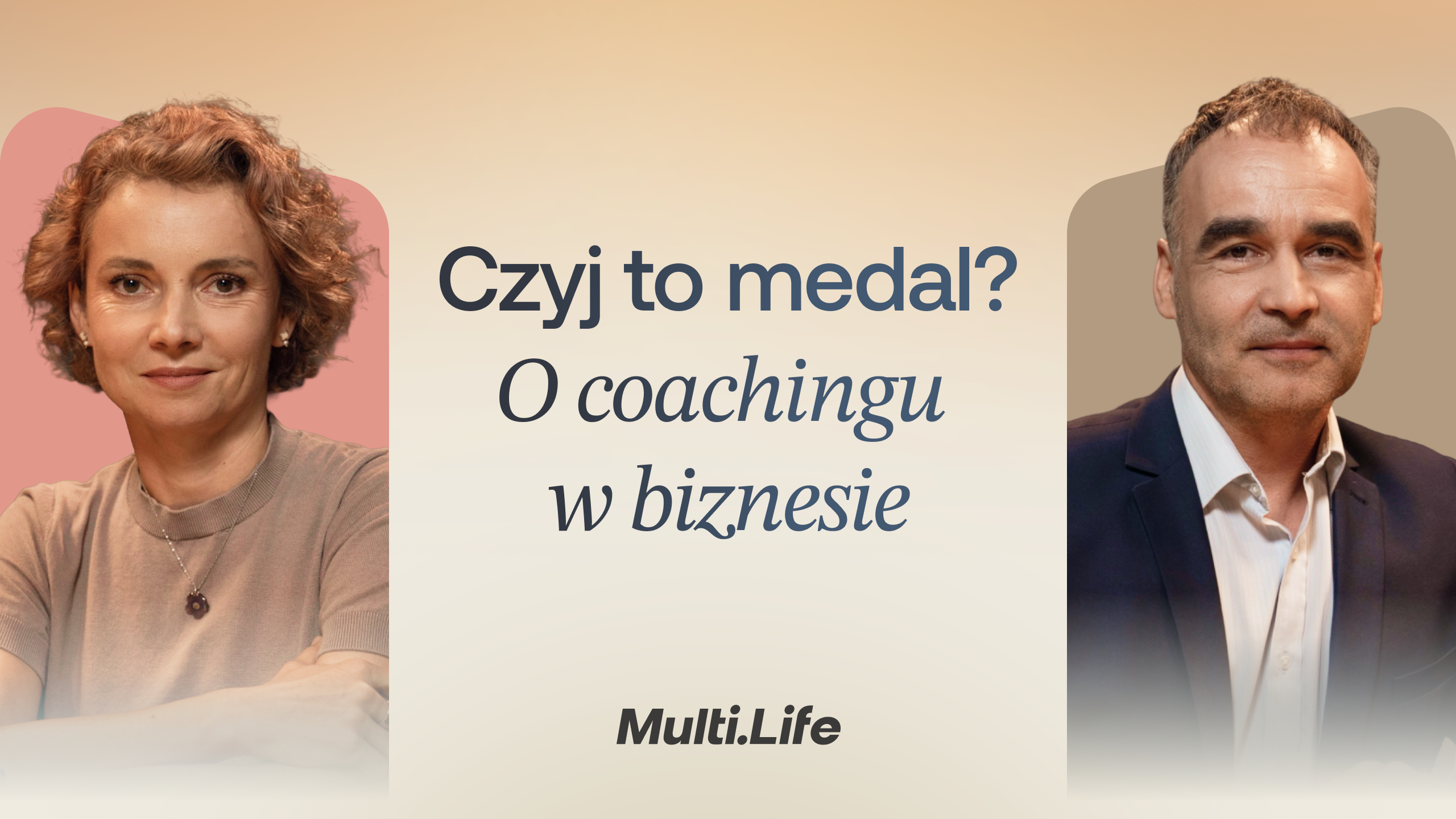

Coaching w organizacjach wciąż bywa mylony z motywowaniem, wydawaniem poleceń albo ostatnią deską ratunku dla „trudnego” pracownika. W tym odcinku Ewa Hartman w cyklu "Firma, która wspiera" rozmawia z Bartoszem Berendtem akredytowanym coachem i superwizorem coachingu o tym, jak HR i zarządy mogą mądrze korzystać z coachingu, żeby był realnym wsparciem rozwoju, a nie kolejnym narzędziem presji.

Rozmowa pokazuje, jak dobrze ułożyć proces coachingowy w firmie: od kontraktu trójstronnego między pracownikiem, organizacją i coachem, przez uzgodnienie celów indywidualnych i biznesowych, po budowanie zaufania, bez którego żaden proces nie zadziała. Gość wyjaśnia, dlaczego coaching „pod przymusem” przynosi odwrotny skutek i komu warto go proponować: talentom przygotowywanym do awansu, nowo awansowanym menedżerom, a także doświadczonym liderom w momentach kryzysu.

W odcinku usłyszysz także:

- dlaczego najważniejszą kompetencją coachingową menedżera jest słuchanie, a nie zadawanie pytań,

- jak odróżnić partnerską relację od pobłażliwości i czym różni się prośba od żądania,

- jak systemowo budować bezpieczeństwo psychologiczne w zespołach,

- dlaczego informacja zwrotna od zespołu może wzmocnić zaufanie albo je zniszczyć, w zależności od tego, co lider z nią zrobi,

- czy sztuczna inteligencja zastąpi coacha i gdzie leży ludzka przewaga,

- jaka jest jedna technika, którą każdy menedżer może wdrożyć od razu.

To odcinek dla HR business partnerów, osób odpowiedzialnych za rozwój i L&D oraz zarządów, które chcą świadomie inwestować w rozwój liderów i budować kulturę opartą na współpracy i zaufaniu.

Nagranie pochodzi z kanału Multi.Life - platformy wellbeing dla firm.

Sprawdź: https://bit.ly/4rHCwkP

Demo dla HR: https://bit.ly/4iwyLu5

00:00:00 - Zapowiedź - partnerstwo, słuchanie i różnica między prośbą a żądaniem

00:01:30 - Przedstawienie gościa - Bartosz Berendt, akredytowany coach i superwizor coachingu

00:02:40 - Czym jest coaching? Zestaw kompetencji bądź metoda pracy

00:04:39 - „Skołczuję cię” - skąd wzięło się wypaczone rozumienie coachingu w biznesie

00:06:30 - Gdy zarząd mówi „będziemy się coachować” - od haseł do konkretnych celów

00:08:52 - Na rzecz kogo pracuje coach? Kontrakt trójstronny i spójność celów pracownika i organizacji

00:11:42 - Coach z zewnątrz - rozwój kariery a sytuacje kryzysowe w zespole

00:16:12 - Coachingowy styl przywództwa według Golemana - dlaczego ta etykieta spłaszcza coaching

00:19:52 - Partnerstwo jako fundament - druga osoba ma kompetencje, by znaleźć rozwiązanie

00:21:07 - Jak słuchać lepiej? Najpierw usłysz siebie - parafraza jako pierwsze narzędzie

00:25:51 - Jak traktować po partnersku w relacji hierarchicznej? Sprawdzanie, czego potrzebuje rozmówca

00:30:36 - Czy partnerstwo może obrócić się przeciwko nam? Klarowność celu

00:36:17 - Szef, który zadaje dużo pytań, się nie zna? To zależy od intencji i odpowiedzialności

00:42:32 - Przykład menedżera w procesie zmiany i potrzeba przewidywalności po stronie odbiorców

00:46:45 - Jak budować bezpieczeństwo psychologiczne? Badanie Edmondson i normalizowanie błędów

00:51:32 - Feedback dla szefa - wypracowanie partnerstwa lidera z podwładnymi i co lider robi z informacją zwrotną

00:55:25 - Czy AI zastąpi coacha? Gdzie leży ludzka przewaga we wspieraniu rozwoju

00:59:14 - Po co rozwijać ludzi? Medal menedżera czy medal zespołu

01:01:49 - Od czego zacząć? Cisza i jeden wdech przed odpowiedzią

01:02:24 - Jaka firma zasługuje na miano „Firmy, która wspiera” - misja, radość z pracy pracowników i podsumowanie rozmowy

‍

“
Published:
5/11/2026 16:37
See also
'Wellbeing in the workplace. How to do it wrong?' video cover
'Wellbeing in the workplace. How to do it wrong?' video cover'Wellbeing in the workplace. How to do it wrong?' video cover
Wellbeing in the workplace. How to do it wrong?

How can you nurture well-being in a way that delivers real results? What mistakes do even experienced managers make? And how can you ensure your team truly appreciates your efforts? Maciej Żylewicz, an experienced business consultant and trainer specializing in well-being and technology, answers these questions and many more.

Well said
'Surviving the Future: AI and the Human Workforce' video cover
'Surviving the Future: AI and the Human Workforce' video cover'Surviving the Future: AI and the Human Workforce' video cover
Surviving the Future: AI and the Human Workforce

Will the job market turn into a race where humans compete against AI? Or is the future more about collaboration? Which skills are worth building today? How can we avoid the threat of deskilling? And what is the role of HR in all of this? In the next episode of the "Company That Supports" series, hosted by Dr. Ewa Hartman, Dr. Iwo Zmyślony will pull back the curtain on the future.

finances
'Best and worst practices in onboarding' video cover
'Best and worst practices in onboarding' video cover'Best and worst practices in onboarding' video cover
Best and worst practices in onboarding

In the first episode of our new series, The Supportive Company, Dr. Ewa Hartman discusses proven methods for effective onboarding. Her guest is Maja Gojtowska, an HR trend observer, consultant, trainer, webinar host, and author of two bestselling HR books.

finances
Why the brain loves simple recipes and why they fail - Bartosz Żukowski

In this episode of the series "A company that supports", Dr. Ewa Hartman talks to Dr. hab. Bartosz Żukowski, prof. University of Łódź, philosopher and cognitive scientist, researcher of the mechanisms of thinking and cognition, about why we so willingly believe in simple recipes for complex problems and how this tendency affects management, decision-making and organizational culture. We talk about: why we love tricks and how the culture of rush and the "factory" language of optimization, efficiency and time management make us start to treat ourselves as a tool, what cognitive ease is and why our brain automatically recognizes what is simple, coherent and familiar as true, how System 1 and System 2 work described by Daniel Kahneman and why a trick promises to solve complex business problems with a tool that is not intended for that purpose, why getting up at 5 a.m. will not make anyone a millionaire and what is not said in popular success stories, such as Michael Phelps' visualization, why no scheme or formula can replace practice and experience, or why you can't become a chess grandmaster from a textbook, whether rituals in the company build community and a sense of security, whether they become a tool of discipline, and why it is worth developing them together with the team, why managers are looking for one sentence that will "do" the matter with the team, and why such a sentence does not exist, such as lack of time, no margin for error and the expectation of immediate perfection push employees towards shortcuts, and what a truly supportive company can do about it. "There is no trick that will protect you against a trick" - says prof. Bartosz Żukowski. What will you do today to ensure that there is room in your organization for time, errors and flexibility, and not just for quick recipes? The recording comes from the Multi.Life channel - a wellbeing platform for companies. Check out: https://bit.ly/4rHCwkP Demo for HR: https://bit.ly/4z2GFSO

finances
Show more