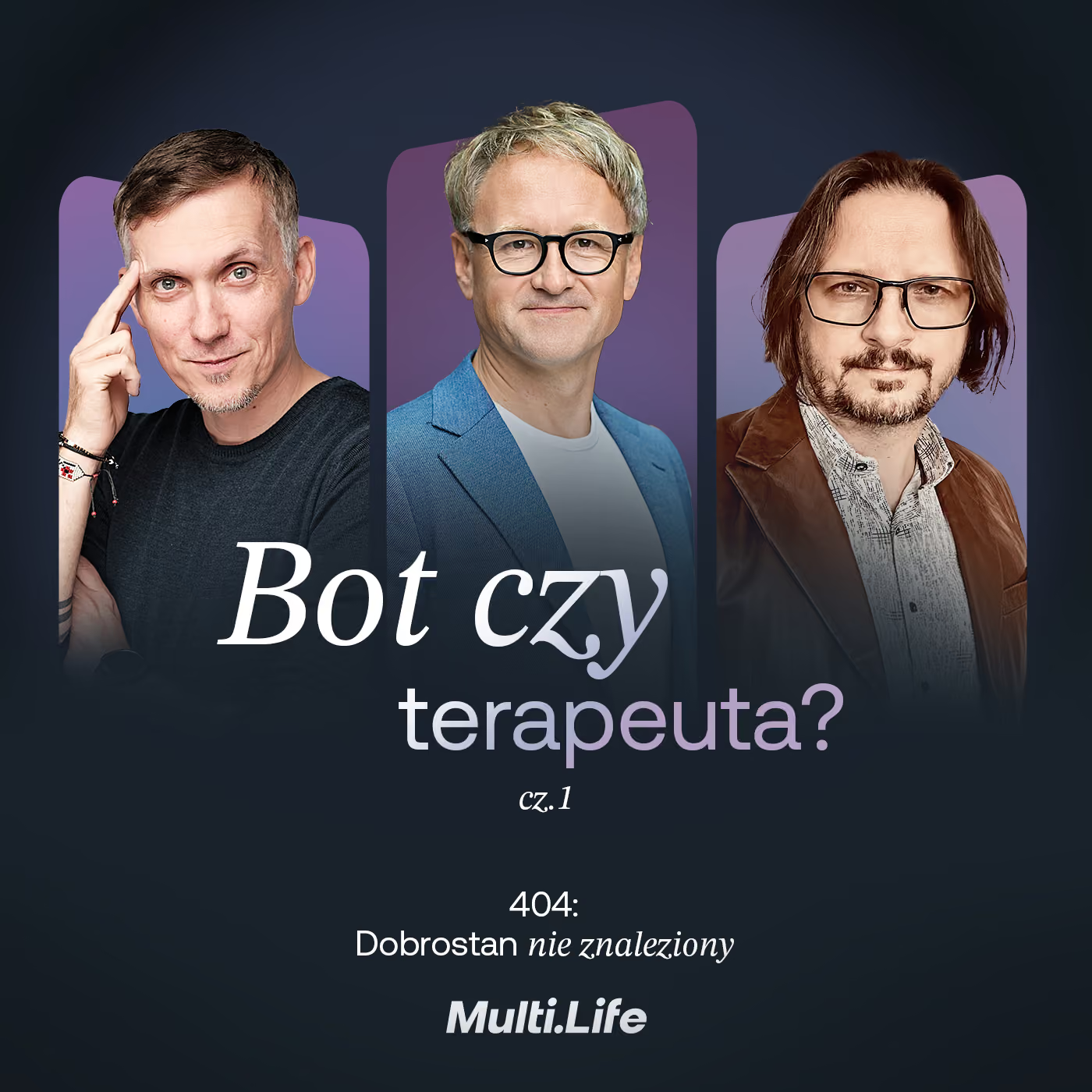
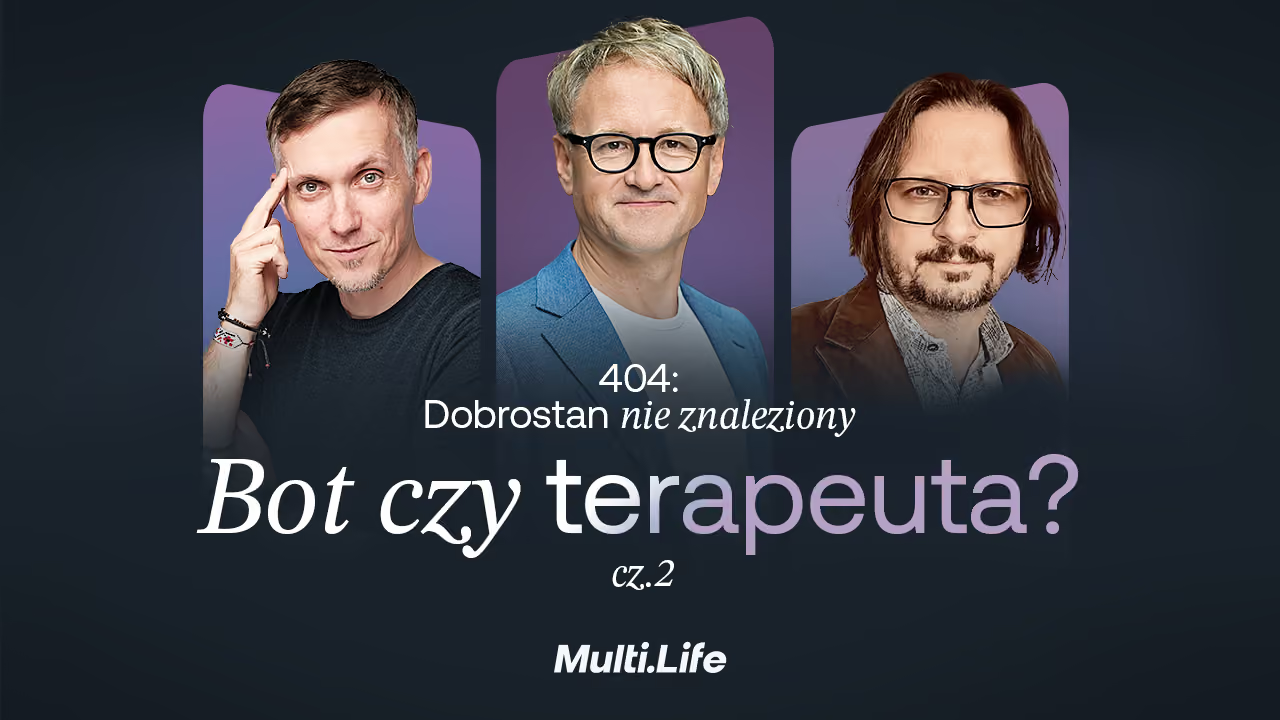
Is it possible that everything you need to support your mental health is right at your fingertips, in an app, available 24/7? Sounds too good to be true, right? The reality, as you might expect, is much more complicated. My guests will take on the challenge of describing it: Andrzej Silczuk, a psychiatrist, and Dr. Paweł Szczęsny, a specialist in bioinformatics and the psychology of artificial intelligence systems.   

  1. 00:00:00 Introduction
  2. 00:01:53 Challenges of online therapy
  3. 00:05:40 Therapeutic chatbots
  4. 00:17:40 Chatbot support - illusion or fact
  5. 00:22:10 Quality of the AI-patient dialogue
  6. 00:35:30 Privacy of conversations with AI
  7. 00:45:00 Is a human-AI duo the future of therapy?
  8. 00:49:25 Ethical and legal issues
“
Published:
19/8/2026 22:35
See also
'Leaders to the rescue – how to support employee mental health' video cover
'Leaders to the rescue – how to support employee mental health' video cover'Leaders to the rescue – how to support employee mental health' video cover
Leaders to the rescue – how to support employee mental health

"Boss, I'm not feeling well" – when it comes to something like a stomach ache, most of us know how to offer support. But what if it’s a mental health issue? How should a leader respond to provide genuine support to an employee? Can you anticipate such situations within a team? And finally, how do you create an environment that fosters trust and open communication?

finances
'Deskilling – how we forgot what we are capable of' video cover
'Deskilling – how we forgot what we are capable of' video cover'Deskilling – how we forgot what we are capable of' video cover
Deskilling – how we forgot what we are capable of

Reading, writing, memorizing, and perhaps even… thinking—are we at risk of slowly "outsourcing" all these skills to increasingly advanced technologies? And if so, what comes next? How can we protect ourselves from losing fundamental competencies? Or perhaps we can let some of them go without regret, gaining new ones in their place? We are asking all these questions today, feeling that while change is inevitable, its direction is not necessarily clear. In the next episode of our series, The Supportive Company, I will discuss development in the age of AI, the risks of deskilling, and the technological revolution with Dr. hab. Bartosz Żukowski, professor at the University of Lodz, a philosopher, cognitive scientist, and researcher of the human mind.

finances
'The Conductor-Leader: Management Through Talent' video cover
'The Conductor-Leader: Management Through Talent' video cover'The Conductor-Leader: Management Through Talent' video cover
The Conductor-Leader: Management Through Talent

In this episode of the "Well Said" series, Andrzej Silczuk speaks with Tina Sobocińska—an HR advisor, university lecturer, and long-time HR director in international organizations—about why the future of leadership requires diversity, what holds women back from promotion, and how organizations can drive change here and now. We discuss: - why diversity in leadership is not just a matter of fairness, but a hard business imperative—and what the data says about it, - what defines a female leader—and why the metaphor of an orchestra conductor describes modern leadership better than that of a charismatic soloist, - how female perfectionism—understood as a fear of judgment—becomes one of the biggest traps on the path to promotion, - why a culture of learning from mistakes builds trust better than any perk, and how to implement it in practice, - where imposter syndrome comes from and why women often decline promotions that men would accept without a second thought, - how socialization into gender roles begins at home and what we can do about it as parents, leaders, and colleagues, - where women disappear from organizational hierarchies—and why this most often happens after maternity leave, - the difference between a mentor and a sponsor—and why we need the latter more than ever today, - how to prepare for the second half of your career before change becomes a necessity rather than a choice. One hundred and thirty-two years to full equality of opportunity—that is the estimate from the World Economic Forum. What can organizations do today to accelerate this change instead of waiting for future generations? This recording is from the Multi.Life channel—a wellbeing platform for companies. Check it out: https://bit.ly/42Lvf7J | Demo for HR: https://multi.life/#formularz

Well said
Okładka filmu 'Improwizacja w praktyce: mniej planu, więcej działania'
Okładka filmu 'Improwizacja w praktyce: mniej planu, więcej działania'Okładka filmu 'Improwizacja w praktyce: mniej planu, więcej działania'
Improvisation in practice: less planning, more action

Does the fear of making a mistake hold you back more than a lack of competence? There is a concrete solution for this. In this episode of our "Company That Supports" series, Dr. Ewa Hartman speaks with Bart Jurkowski—a business psychologist and creator of the I'MPRO IMPRO method—about how to build flexibility and psychological resilience in a dynamic work environment. We discuss how your internal dialogue influences decision-making, what psychological safety in a team looks like and how to recognize it, which questions strengthen adaptability and openness within an organization, and how improvisation as a method helps train mindfulness, confidence in communication, and collaboration. You will also find simple improvisation exercises in this episode.

finances
Show more